
PIPELINE COMBUSTION EQUIPMENT | Updated August 2026 | 8 min read
WHAT YOU’LL LEARN IN THIS GUIDE
- Why pipeline blowdown flares differ from production site flares in design requirements
- How pipeline operating pressure, diameter, and gas composition drive flare sizing
- When a pipeline blowdown must use a flare versus when venting is permitted
- PHMSA, EPA, and state regulatory requirements that govern pipeline blowdown emissions
- Temporary vs. permanent pipeline blowdown flare configurations
- How to size a flare stack for pipeline segment blowdown service
- Safety requirements for pipeline blowdown flare operations including exclusion zones and ignition timing
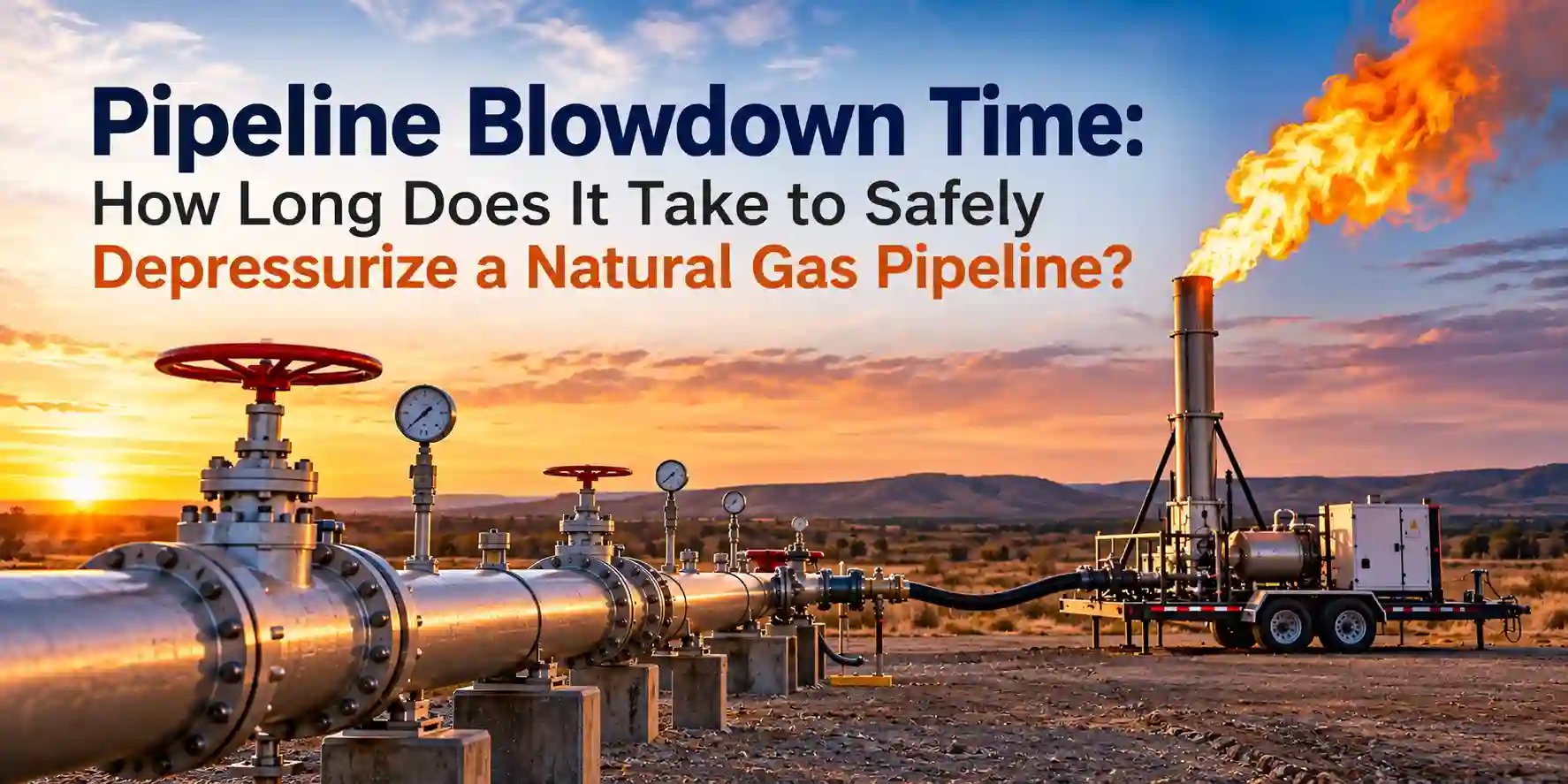
A pipeline blowdown flare combusts the gas released when a pipeline segment is depressurized for inspection, maintenance, pigging, valve replacement, or leak isolation. Unlike production site flares that operate continuously or near-continuously, pipeline blowdown flares operate on a transient basis: they handle a large, fast-declining gas flow that starts at line pressure and drops to atmospheric in a matter of minutes to hours, depending on the segment volume and initial pressure.
Hero Process Solutions, founded in 2011 and headquartered in Kellyville, Oklahoma with operations in Midland, Texas, manufactures combustion equipment for pipeline blowdown, compressor station blowdown, and high-pressure gas control applications. This guide covers the sizing requirements, regulatory framework, and equipment choices for pipeline maintenance and blowdown flare service.
DIRECT ANSWER: Pipeline Blowdown Flare
A pipeline blowdown flare is a combustion device used to destroy natural gas released when a pipeline segment is depressurized for maintenance, inspection, or emergency isolation. Blowdown flares handle large instantaneous gas flows that decline rapidly as the segment pressure drops from operating pressure toward atmospheric. The flare must be sized for the peak blowdown rate at the start of the operation, which occurs when the full segment pressure drives gas through the blowdown valve. Regulatory requirements for pipeline blowdown flares depend on pipeline type (interstate vs. intrastate), segment location, and federal or state air quality permit conditions. Where venting is not permitted by regulation or environmental policy, a flare is the required control device for pipeline blowdown operations.
1. What Makes Pipeline Blowdown Flare Design Different
Production site flares, compressor station flares, and refinery flares all operate with a relatively steady or slowly varying gas supply. Pipeline blowdown service is fundamentally transient: the initial blowdown rate at line pressure can be very large, but it declines continuously and nonlinearly as the segment inventory depletes. A flare sized only for the average blowdown rate will be overwhelmed in the first few minutes of the operation when the peak rate occurs.
Peak rate sizing is everything. The peak blowdown rate occurs at the moment the blowdown valve opens at full line pressure. For a large-diameter, high-pressure transmission pipeline, this peak rate can be in the tens of millions of standard cubic feet per day (MMscfd) for the first seconds to minutes of the blowdown. As segment pressure declines, the rate drops proportionally. The flare tip, header, and knockout drum must all be sized for the peak rate, not the time-average rate over the blowdown event.
Transient combustion stability. A pilot designed for a steady-state production flow may not maintain stable ignition across the full range of a pipeline blowdown: from a potentially very high-velocity initial flow that could blow out the pilot, down to a low-velocity tail-end flow that may fall below the minimum tip velocity for stable combustion. Pipeline blowdown flares require pilot designs and tip configurations that can handle this wide flow range in a single operation.
High-pressure gas handling. Transmission pipeline operating pressures typically range from 200-1,500 psi. Intermediate and gathering line pressures vary widely by system. The pressure letdown from line pressure to flare header operating pressure must occur through a properly sized blowdown valve or orifice, and the associated noise and potential for hydrate formation during pressure letdown must be addressed in the system design.
2. When Pipeline Blowdown Must Use a Flare
Not all pipeline blowdowns require a flare. The decision to flare versus vent during a pipeline blowdown depends on several factors.
Regulatory requirements. PHMSA regulations under 49 CFR Parts 192 (natural gas) and 195 (liquid pipelines) govern pipeline safety but do not directly mandate flaring versus venting for blowdown operations in most cases. EPA regulations under 40 CFR Part 60 (NSPS) and state air quality permits may restrict venting of methane or VOCs above certain thresholds. In states with strict methane venting restrictions, or for pipelines subject to greenhouse gas reporting under EPA 40 CFR Part 98, flaring rather than venting during planned blowdowns is increasingly required.
Safety considerations. Venting a large-diameter high-pressure pipeline segment in or near populated areas, road crossings, or ignition sources creates an unacceptable safety risk. Flaring converts the methane to CO₂ and water, eliminating the risk of ignition of the vented gas cloud. For planned maintenance blowdowns where the segment location presents safety risks from venting, a flare is the appropriate control regardless of regulatory requirements.
Environmental policy. Pipeline operators with commitments under voluntary methane reduction programs, including the ONE Future initiative or Natural Gas STAR, have adopted policies requiring flaring rather than venting for planned blowdown operations above specified gas volume thresholds. For operators under these commitments, a portable blowdown flare is a required operational tool regardless of regulatory mandates.
3. Sizing a Pipeline Blowdown Flare
The peak blowdown rate can be calculated from the pipeline segment volume, initial pressure, temperature, and the blowdown valve or orifice size. The fundamental relationship is that the initial mass flow rate is determined by the choked flow condition at the blowdown valve when the valve opens at full line pressure.
For a given segment:
- Segment volume (MMscf) = pipe inner diameter (ft) × segment length (ft) × π/4 × gas compressibility factor correction
- Peak flow rate is a function of operating pressure, temperature, gas molecular weight, and the blowdown valve coefficient (Cv)
- The blowdown time profile follows a roughly exponential decline from peak rate to near-zero as pressure depletes
For preliminary sizing of a pipeline blowdown flare, the design peak flow rate is typically taken as 1.25 to 1.5 times the calculated peak blowdown rate to provide a safety margin for valve opening transients and flow surges.
CRITICAL RULE
Do not use the time-average flow rate or the end-of-blowdown flow rate as the flare design basis. Both undersize the flare relative to the actual peak rate that occurs at the start of the operation. A flare undersized for the peak blowdown rate will experience tip overpressure, possible blowout of the pilot or main flame, and potential structural loading beyond the tip’s design rating in the first minutes of the operation, when the consequences of flare failure are most severe.
4. Temporary vs. Permanent Pipeline Blowdown Flare Configurations
Pipeline blowdown flares are available in two configurations depending on the frequency and predictability of blowdown operations at a given location.
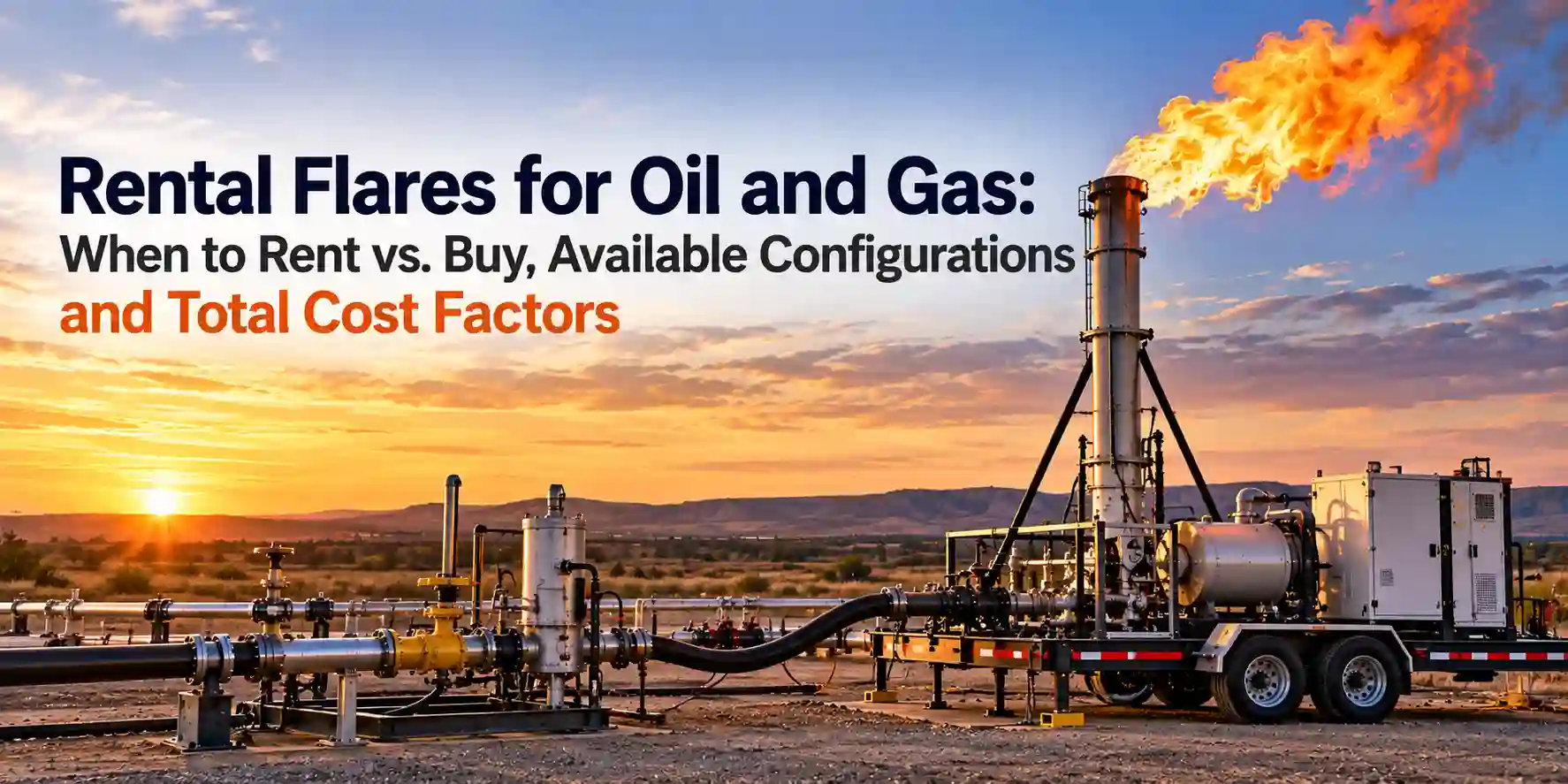
Temporary portable blowdown flares. For maintenance operations at locations where blowdowns occur infrequently or where the connection point changes between operations, trailer-mounted or skid-mounted portable flare systems are the standard approach. A portable pipeline blowdown flare includes a quick-connect inlet manifold, integral knockout drum, pressure letdown provisions, and a self-supporting flare tip on a telescoping or fixed mast. Setup time for a portable blowdown flare system is typically a few hours for a trained crew. The portable flares product line at Hero Process Solutions includes configurations rated for pipeline blowdown service.
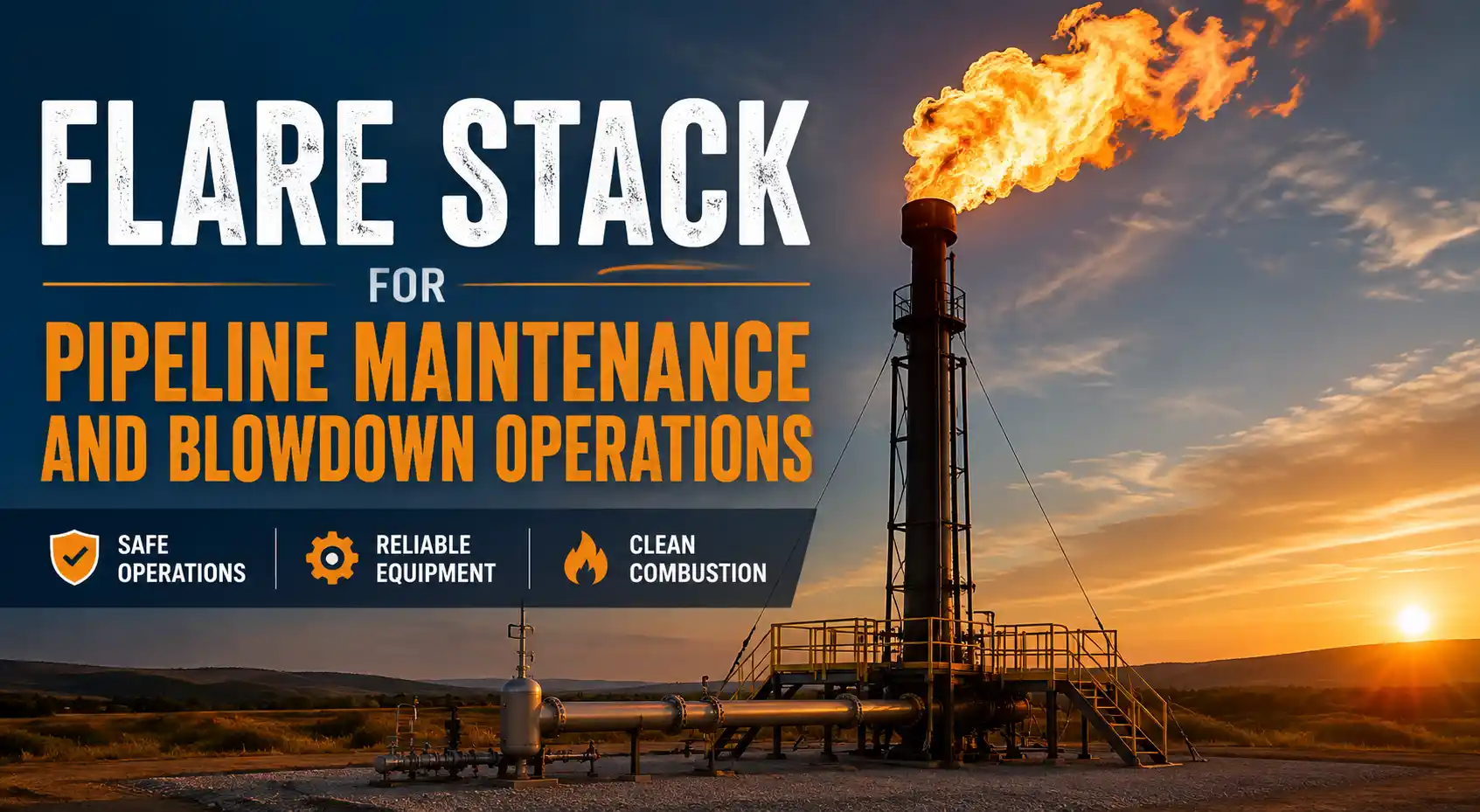
Permanent blowdown flare stations. At compressor stations, meter stations, or valve sites where planned blowdowns occur on a regular maintenance schedule, a permanent installed blowdown flare with fixed connection to the pipeline blowdown header is more practical than mobilizing portable equipment for each operation. Permanent installations include a fixed flare stack, knockout drum, pilot system with continuous monitoring, and connection to the facility control system. The flares product line at Hero Process Solutions covers permanent elevated configurations for compressor station and valve station blowdown service.
5. Safety Requirements for Pipeline Blowdown Flare Operations
Pipeline blowdown flare operations require pre-operation safety planning that is not required for continuously operating production site flares.
Exclusion zone establishment. Before a blowdown operation begins, an exclusion zone must be established around the flare based on thermal radiation calculations and gas dispersion analysis in the event of pilot flame failure. The exclusion zone radius depends on the peak blowdown rate, gas composition, flare tip height, and wind conditions. ANSI/API RP 521 provides the thermal radiation calculation methodology for establishing exclusion zones.
Pilot ignition before gas flow. The pilot must be verified lit before the blowdown valve opens. Introducing high-pressure gas to an unlit flare tip without a lit pilot creates a gas accumulation risk. Verify pilot ignition and confirm thermocouple or UV flame signal before initiating the blowdown valve opening sequence.
Wind speed and direction monitoring. High wind speeds during a pipeline blowdown can blow unburned gas from the flare flame back toward ground level. Wind speed limits for blowdown flare operations are site-specific but typically range from 15-25 mph sustained as the maximum allowable condition for initiating a planned blowdown. Monitor wind speed and direction at the site before and during the operation.
Contact Hero Process Solutions at sales@hero-ps.com or (918) 941-2166 to discuss pipeline blowdown flare equipment for a specific pipeline maintenance application. Field services include equipment setup, pilot verification, and operational support for pipeline blowdown operations.
Article Summary
- A pipeline blowdown flare combusts gas released during pipeline depressurization for maintenance, inspection, valve replacement, or emergency isolation. The transient, high-peak-rate nature of blowdown operations makes sizing and pilot stability the critical design challenges.
- The peak blowdown rate occurs at the moment the blowdown valve opens at full line pressure and may be in the tens of MMscfd for large-diameter transmission pipelines. The flare tip, header, and knockout drum must all be sized for this peak rate, not the time-average blowdown rate.
- Venting versus flaring during a pipeline blowdown depends on regulatory requirements, safety considerations, and environmental policy commitments. In densely populated areas, near ignition sources, or for operators with methane reduction commitments, flaring is required regardless of regulatory mandates.
- Pressure letdown from line pressure to flare header pressure must address hydrate formation risk. Methanol injection or trace heat is required for high-pressure natural gas expansion in cold ambient conditions.
- Temporary portable blowdown flares are used for infrequent or location-variable operations. Permanent installed blowdown flare stations are practical at compressor stations, meter stations, and valve sites with regular maintenance blowdown schedules.
- Pre-operation safety planning for pipeline blowdown flare operations must establish an exclusion zone, verify pilot ignition before gas flow begins, and monitor wind speed and direction for the duration of the operation.
- Hero Process Solutions manufactures portable and permanent flare systems for pipeline blowdown service, with field operational support available for planned maintenance and emergency operations.
Frequently Asked Questions
What is a pipeline blowdown flare and when is one required?
A pipeline blowdown flare is a combustion device that destroys natural gas released when a pipeline segment is depressurized for maintenance, pigging, valve replacement, or emergency isolation. Flaring rather than venting is required when regulatory requirements restrict methane venting, when the blowdown location presents safety risks from a vented gas cloud, or when the operator has policy commitments to flare rather than vent planned blowdown gas volumes. Interstate natural gas pipelines subject to PHMSA oversight and state air quality permit conditions must comply with applicable rules for each blowdown event.
How is a pipeline blowdown flare sized?
A pipeline blowdown flare is sized for the peak blowdown rate, which occurs at the moment the blowdown valve opens at full line pressure. Peak rate is calculated from the pipeline segment volume, initial operating pressure, temperature, and blowdown valve coefficient. The design peak rate should include a 25-50% safety margin above the calculated peak rate to account for valve opening transients. Do not use the time-average or end-of-blowdown flow rate as the design basis; both significantly undersize the system relative to actual peak conditions.
What is the exclusion zone around a pipeline blowdown flare?
The exclusion zone around a pipeline blowdown flare is the area that must be cleared of non-essential personnel before the blowdown begins. The exclusion zone radius is determined by thermal radiation calculations per ANSI/API RP 521 based on the peak blowdown rate, flare tip height, and worst-case wind conditions. The zone must also account for ground-level gas concentrations in the event of pilot flame failure, which requires a dispersion analysis at the peak blowdown rate and site meteorological conditions.
Can a pipeline blowdown use a portable flare instead of a permanent installation?
Yes. Portable trailer-mounted or skid-mounted blowdown flares are standard equipment for pipeline maintenance blowdowns where the connection point varies or where blowdowns occur infrequently. A portable blowdown flare system includes a quick-connect inlet, integral knockout drum, pressure letdown provisions, and a flare tip on a portable mast. Setup time is typically a few hours for a trained crew. For locations with frequent scheduled blowdowns, such as compressor stations, a permanent installed blowdown flare station is more practical than mobilizing portable equipment for each maintenance cycle.
What safety steps are required before starting a pipeline blowdown flare operation?
Three safety steps are required before opening the blowdown valve: verify pilot ignition and confirm the flame signal from the thermocouple or UV sensor; establish the exclusion zone and confirm all non-essential personnel are outside it; and check wind speed and direction to confirm conditions are within acceptable limits for the operation. Do not open the blowdown valve until all three are confirmed. Introducing high-pressure gas to an unlit flare creates a gas accumulation hazard. High wind speeds during the operation can blow unburned gas from the flame to ground level, creating a secondary ignition risk.
Does Hero Process Solutions supply equipment for pipeline blowdown flare service?
Yes. Hero Process Solutions manufactures portable and permanent flare systems rated for pipeline blowdown service, including configurations for high-pressure gas inlet, integral knockout drum, and variable-flow flare tip designs capable of handling the peak-to-tail-end flow range of a pipeline segment depressurization. Field operational support for pipeline blowdown events is available. Contact sales@hero-ps.com or (918) 941-2166 to discuss equipment specifications for a specific pipeline maintenance project.