
UPSTREAM COMBUSTION EQUIPMENT | PERMIAN BASIN | Updated August 2026 | 8 min read
WHAT YOU’LL LEARN IN THIS GUIDE
- Why Permian Basin flare selection differs from other US basins
- How high-BTU casinghead gas and H₂S variability affect flare tip and assist medium choices
- EPA 40 CFR 60 Subpart OOOOb requirements that apply to Permian Basin production sites in Texas and New Mexico
- TCEQ and NMED permit requirements specific to Permian Basin flare installations
- How methane reduction goals from the Permian Global Methane Pledge affect flare selection and operation
- Equipment options for permanent and portable Permian Basin flare installations
- How to meet the 98% combustion efficiency standard with high-variability Permian gas streams
Permian Basin flare selection is not a catalog exercise. The Delaware and Midland sub-basins produce some of the highest-BTU casinghead gas in North America, often with variable H₂S concentrations and infrastructure constraints that make continuous gas capture impractical at early production stages. Operators in West Texas and southeastern New Mexico face a specific combination of regulatory pressure, gas composition variability, and logistical constraints that must all be addressed in the flare specification.
Hero Process Solutions, founded in 2011 and headquartered in Kellyville, Oklahoma with a field operations presence in Midland, Texas, manufactures combustion equipment specifically for Permian Basin production, completions, and well test applications. This guide covers the selection criteria, regulatory requirements, and equipment configurations that apply to Permian Basin methane reduction and flare compliance projects.
DIRECT ANSWER: Permian Basin Flare
A Permian Basin flare is a combustion device used at West Texas and New Mexico production sites to destroy associated casinghead gas, well test gas, or emergency relief gas that cannot be captured and routed to sales. Permian Basin flares must meet EPA 40 CFR 60 Subpart OOOOb’s 98% combustion efficiency requirement at affected facilities, and must comply with Texas Commission on Environmental Quality (TCEQ) or New Mexico Environment Department (NMED) permit conditions depending on site location. For high-BTU Permian casinghead gas with variable H₂S content, air-assist or utility flare designs with NACE-appropriate materials are the standard specification for permanent production site installations.
1. Permian Basin Gas Composition and What It Means for Flare Design
Permian Basin associated gas is high-BTU gas, typically 1,050-1,200 BTU/scf, with significant natural gas liquid (NGL) content including ethane, propane, and butane that elevate the heating value above dry Appalachian or Haynesville production. This matters for flare design in two ways.
Smokeless capacity requirements are higher. High-BTU gas with heavy NGL content produces more luminous, sooty combustion when burned without assist. Meeting the smokeless combustion requirements in TCEQ and NMED permits at the design flow rate requires more assist medium (air or steam) per unit of gas volume than would be needed for dry gas of the same flow rate. Air-assist designs are the most common Permian Basin choice because they do not depend on a steam supply that may not be available at remote production locations.
H₂S variability requires design flexibility. Permian Basin production includes zones that produce clean sweet gas alongside zones with significant H₂S, and H₂S concentration can vary during the production life of a single well. A flare specified only for the initial low-H₂S production profile may be inadequate if H₂S increases as production declines. For permanent production site flares, specifying NACE MR0175/ISO 15156-rated pilot fittings and stainless small-bore gas supply piping costs less upfront than a future flare replacement when H₂S appears.
2. EPA OOOOb Requirements at Permian Basin Production Sites
EPA 40 CFR 60 Subpart OOOOb applies to new, modified, and reconstructed production sites in the Permian Basin and throughout the US. The 98% combustion efficiency requirement under OOOOb governs flares used as control devices at affected well sites, tank batteries, and compressor stations.
Key OOOOb provisions that affect Permian Basin operators include:
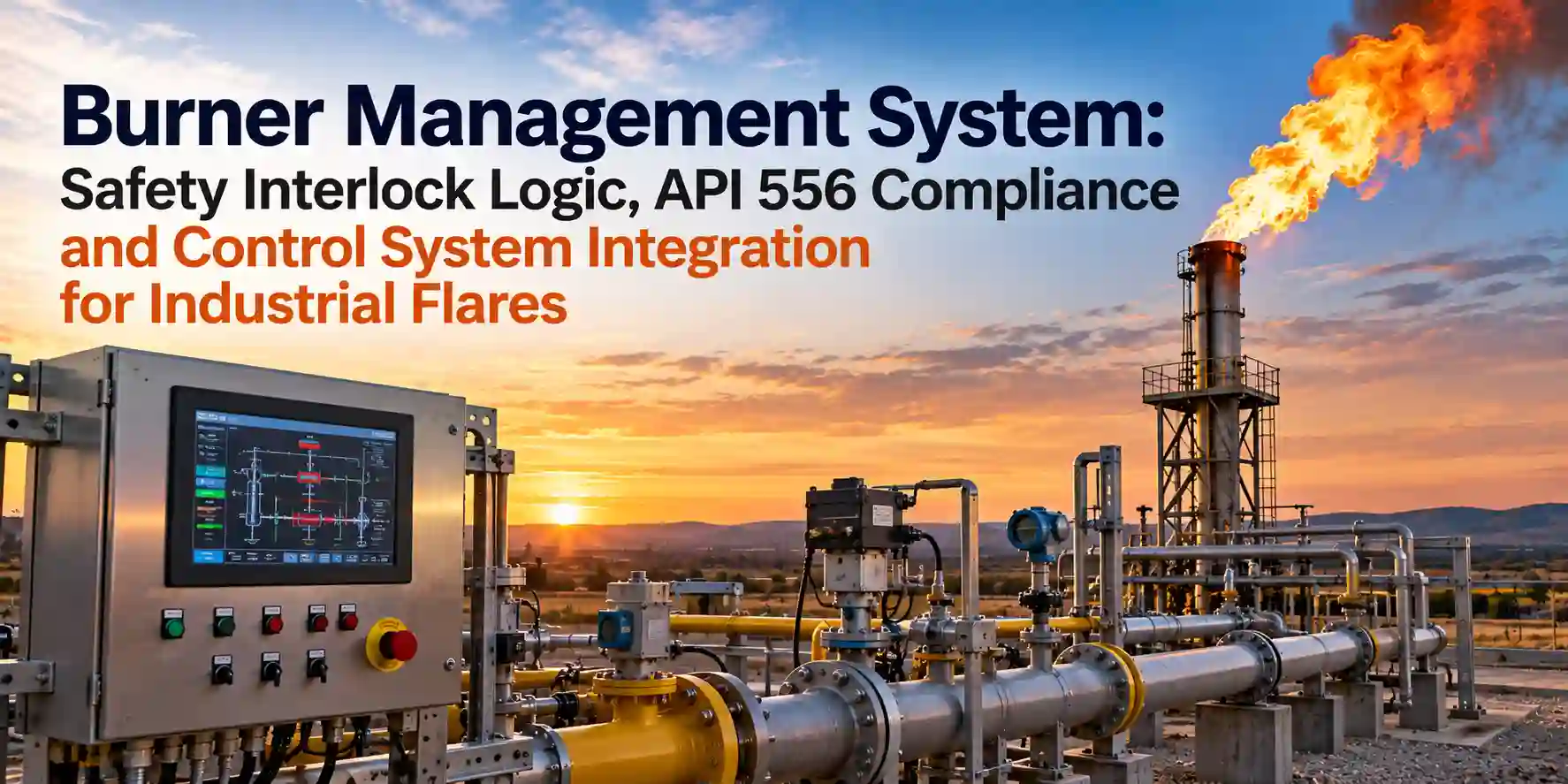
- Continuous pilot flame monitoring with thermocouple or equivalent detection is required for all flares at affected facilities. Remote monitoring via SCADA is the practical implementation for Permian Basin sites where manned continuous operations are not always present.
- Flares used to control storage vessel emissions (tank battery flares) must demonstrate 95% VOC emission reduction or 98% combustion efficiency for the HAP fraction.
- The OOOOb performance standard requires a visible flame or a verified lit pilot at all times when gas is flowing to the flare. Pilot blowouts during Permian Basin high-wind events are a documented compliance challenge that must be addressed in pilot system design.
- Operators must keep records of flare operations, pilot monitoring data, and maintenance activities for permit compliance demonstrations.
The OOOOb compliance resources at Hero Process Solutions include flare system configurations that satisfy the pilot monitoring, combustion efficiency, and documentation requirements for Permian Basin affected facilities.
3. TCEQ and NMED Permit Requirements
Permian Basin operators in Texas fall under TCEQ jurisdiction. Those in the Delaware Basin portions of Lea and Eddy counties in New Mexico fall under NMED. The two agencies have different permit pathways for production site flares, and operators with acreage on both sides of the state line must maintain separate permit compliance programs.
Texas TCEQ. Production site flares in Texas are typically authorized under TCEQ’s Permit by Rule provisions in 30 TAC Chapter 106, or under a New Source Review (NSR) permit for facilities above emission thresholds. TCEQ permit conditions include operational limits on flaring hours per year, emission limits for NOx and VOCs, and requirements for smokeless operation during normal operations. The Oil and Gas Inspection program under TCEQ has increased flare inspection activity in the Permian Basin in recent years, making permit compliance documentation a priority for operators.
New Mexico NMED. New Mexico’s Oil Conservation Division (OCD) and Air Quality Bureau have jointly implemented flaring reduction rules for Permian Basin operators. NMED air permits for production sites in Eddy and Lea counties include flaring time limits and combustion efficiency requirements that parallel EPA OOOOb standards. Operators with significant flaring volumes may also face OCD production curtailment orders if flaring exceeds OCD thresholds.
4. Methane Reduction in the Permian Basin: Equipment Choices
The Permian Basin is at the center of the US methane reduction agenda. Multiple voluntary and regulatory frameworks, including the Permian Global Methane Pledge commitments made by major operators, EPA OOOOb, and TCEQ/NMED state rules, converge on the same operational goal: capture more gas and, when capture is not possible, burn it with high combustion efficiency rather than venting it.
For gas that genuinely cannot be captured, the flare is the required control device. The performance difference between a well-specified flare and a poorly specified one is the difference between 98% combustion efficiency and 85% or lower when the system is not sized for actual operating conditions. At a high-volume Permian Basin well, even a modest combustion efficiency shortfall represents significant methane and VOC emissions over the well’s production life.
KEY INSIGHT
Wind speed is the single largest variable in Permian Basin flare performance that is most often underestimated in the initial specification. West Texas sustained winds of 20-30 mph are common, and gusts above 40 mph occur regularly. An open utility flare without wind deflector or wind-resistant pilot design can experience pilot blowout in routine Permian Basin weather. If your flare specification does not include a pilot design validated for your site’s 90th-percentile wind speed, you are specifying a system that will generate OOOOb compliance events in normal operating conditions.
5. Permanent vs. Portable Permian Basin Flare Configurations
Permian Basin flare applications divide into two categories: permanent production site flares that remain at the location for the life of the well, and portable well test and completions flares that move between locations as operations require.
Permanent production site flares. Tank battery flares, separator vents, and emergency relief flares at Permian Basin production facilities are typically elevated air-assist or utility designs on fixed foundations. Permanent designs allow heavier tip constructions, larger knockout drum volumes, and more sophisticated pilot monitoring systems than portable configurations. The air-assist flares from Hero Process Solutions are available in fixed elevated configurations for permanent Permian Basin production service.
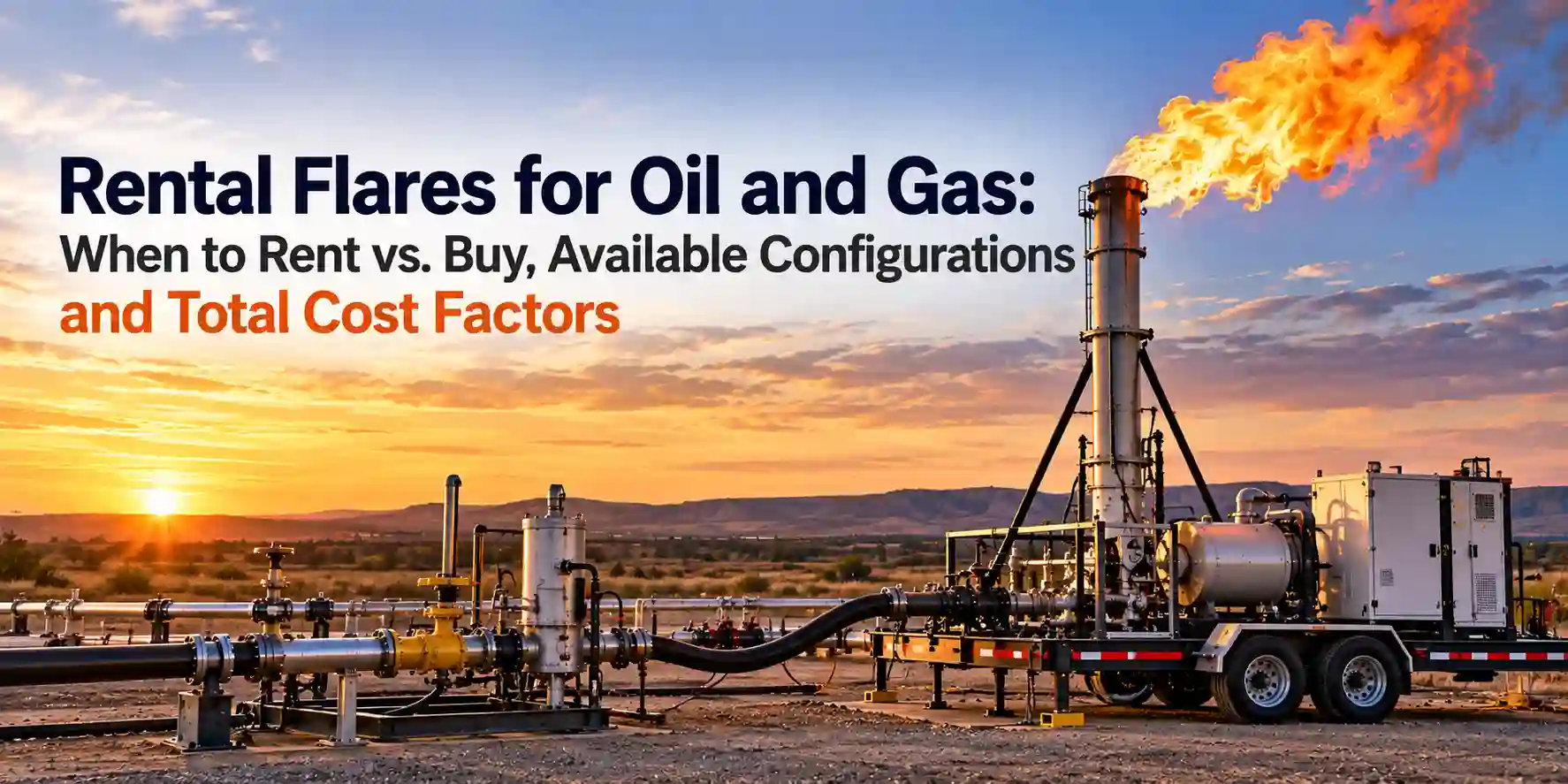
Portable well test and completions flares. Flowback, well test, and initial production flares in the Permian Basin require trailer-mounted or skid-mounted configurations that can be mobilized and set up quickly. The portable flares product line at Hero Process Solutions includes trailer-mounted air-assist and utility configurations designed for Permian Basin completions and well test service, with wind-resistant pilot systems for West Texas field conditions.
For vapor recovery from tank batteries at Permian Basin production sites, vapor recovery units (VRUs) are the first choice where gas volumes justify the capital cost. When VRU installation is not economic or gas volumes are too low, a dedicated tank battery flare is the required alternative. Contact Hero Process Solutions at sales@hero-ps.com or (918) 941-2166 to discuss flare or VRU options for a specific Permian Basin application.
6. Flare Tip Selection for Permian Basin High-BTU Gas
High-BTU Permian casinghead gas requires more attention to smokeless capacity than dry gas applications. At design flow conditions, the tip must achieve smokeless combustion without excessive assist medium consumption. At turndown conditions, the tip must maintain stable combustion without pilot blowout or flameout.
For Permian Basin permanent production site flares, air-assist designs provide the best balance of smokeless capacity and operational reliability without requiring a steam supply. The blower-forced air creates the turbulent mixing needed to achieve smokeless combustion of high-BTU casinghead gas, and modern variable-speed blower controls allow the air flow to be adjusted automatically as gas production rate changes across the day.
For portable completions and well test flares where weight and setup time are constraints, utility flare designs with wind-resistant pilots are commonly used in the Permian Basin for short-duration service where permit conditions allow visible smoke during the completions period. Confirm permit requirements with TCEQ or NMED before mobilizing a utility flare for completions service in an area with active air quality oversight.
Article Summary
- Permian Basin flares must address high-BTU casinghead gas with NGL content, variable H₂S from zone to zone, and West Texas wind conditions that challenge standard pilot designs, making the selection and specification more complex than a dry gas application.
- EPA 40 CFR 60 Subpart OOOOb’s 98% combustion efficiency requirement applies to flares at affected Permian Basin production sites in both Texas and New Mexico.
- TCEQ and NMED have separate and different permit pathways for production site flares. Operators with acreage in both states must maintain separate compliance programs for each jurisdiction.
- Wind speed at the pilot is the most commonly underestimated Permian Basin design variable. Pilot systems must be specified for the site’s 90th-percentile wind speed to prevent routine OOOOb compliance events from pilot blowouts.
- Air-assist flare designs are the preferred specification for permanent Permian Basin production site flares because they achieve smokeless combustion of high-BTU casinghead gas without requiring a steam supply at remote locations.
- Portable trailer-mounted flares are used for completions, flowback, and well test service. Permit conditions must be confirmed with TCEQ or NMED before mobilizing utility flares for completions service.
- Hero Process Solutions operates from Midland, Texas and manufactures both permanent and portable flare configurations for Permian Basin service.
Frequently Asked Questions
What EPA regulations apply to flares at Permian Basin production sites?
EPA 40 CFR 60 Subpart OOOOb is the primary federal rule governing flares at new, modified, and reconstructed production sites in the Permian Basin and throughout the US. OOOOb requires 98% combustion efficiency for flares used as control devices at affected facilities, plus continuous pilot flame monitoring and record-keeping. Storage vessel (tank battery) flares must achieve 95% VOC reduction or 98% combustion efficiency for the HAP fraction. State rules under TCEQ (Texas) and NMED (New Mexico) apply in addition to federal OOOOb requirements.
What makes Permian Basin flare design different from other US basins?
Three factors distinguish Permian Basin flare applications: high-BTU casinghead gas with significant NGL content requires more assist medium for smokeless combustion than dry gas; H₂S concentration varies by zone and can change over well life, requiring design flexibility; and West Texas wind conditions are among the most challenging in the continental US for pilot flame stability. A flare specified for the Appalachian or Haynesville basin without adjustment for Permian conditions will underperform on smokeless capacity and may experience frequent pilot blowouts.
Does Hero Process Solutions have equipment in the Permian Basin?
Yes. Hero Process Solutions has field operations in Midland, Texas and regularly supplies combustion equipment to Permian Basin operators for permanent production site installations, completions and well test service, and tank battery control applications. Contact sales@hero-ps.com or (918) 941-2166 to discuss availability and lead times for Permian Basin projects.
What flare is required for a Permian Basin tank battery?
Tank battery flares at Permian Basin production sites must achieve 95% VOC emission reduction or 98% combustion efficiency under EPA OOOOb requirements. TCEQ permit conditions may impose additional operational limits. For high-production tank batteries with significant gas volumes, an air-assist flare provides the combustion performance needed to meet these requirements while achieving smokeless operation required by most TCEQ permits. For lower-volume tank batteries, a utility flare may be permitted depending on gas composition and facility emission profile.
Can I use a portable flare for Permian Basin completions and flowback?
Yes. Portable trailer-mounted flares are routinely used for Permian Basin completions, flowback, and well test operations. Confirm permit requirements with TCEQ or NMED for the specific location before mobilizing, as some areas with active air quality oversight have imposed smokeless operation requirements or hour limits on completions flaring. Hero Process Solutions offers trailer-mounted portable flare configurations with wind-resistant pilot systems designed for West Texas field conditions.
What is the combustion efficiency requirement for Permian Basin flares under OOOOb?
EPA 40 CFR 60 Subpart OOOOb requires 98% combustion efficiency for flares used as control devices at affected Permian Basin production sites. Demonstrating compliance requires either performance test results under EPA Method 22 and Method 25C, or continuous pilot flame monitoring documentation showing the pilot was lit during all periods when gas was flowing to the flare. A flare that does not meet the 98% standard, or that has documented pilot flame outages, is out of compliance with OOOOb regardless of its nominal design specification.