
Thermal Oxidizers
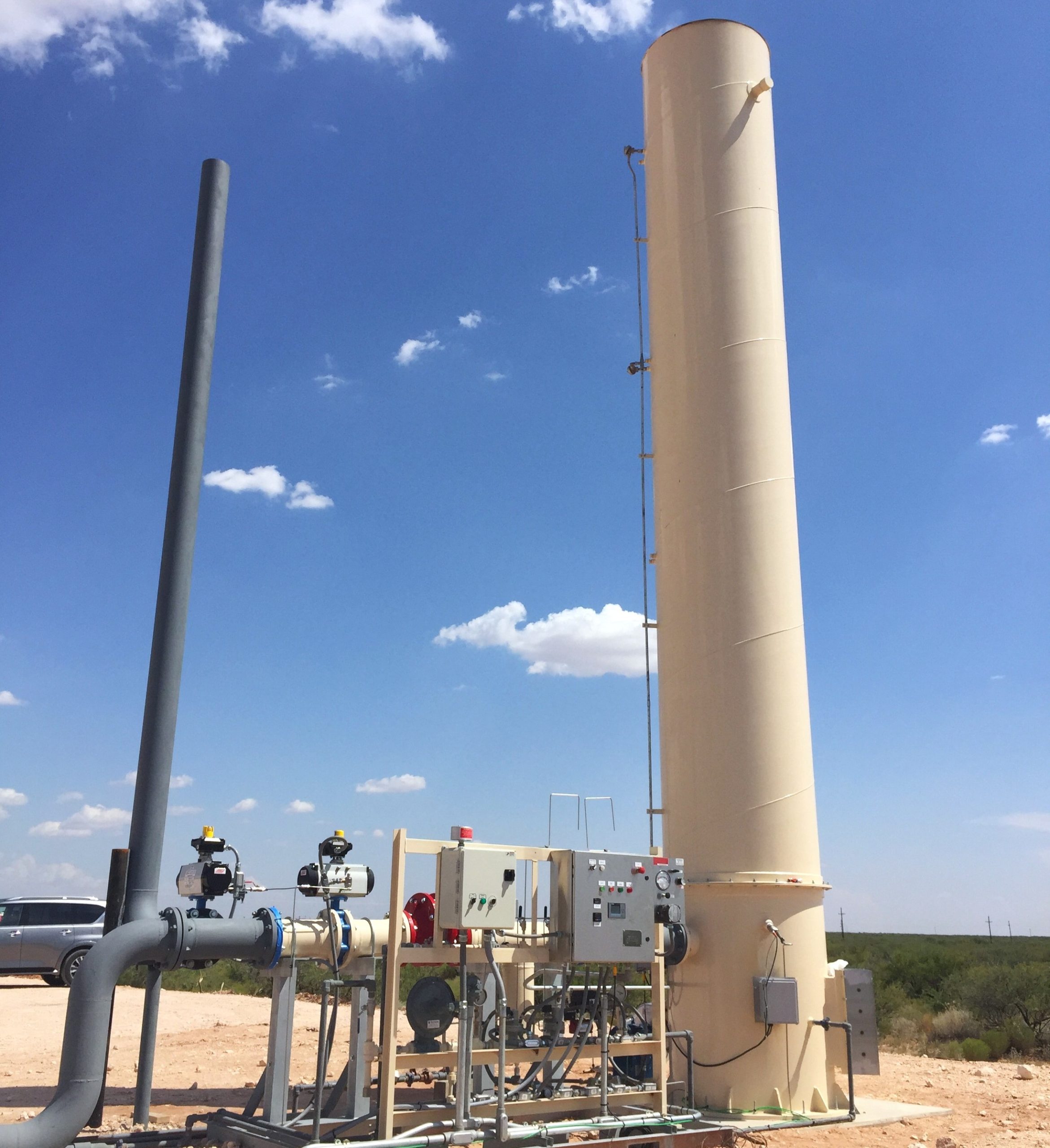
HERO Process Solutions offers a wide range of Thermal Oxidizers. Thermal Oxidizers (TO) are generally used with Destruction Rate Efficiency (DRE) requirements up to 99.9%, waste streams with a very low heat content (<200 Btu/SCF), or hazardous gases that require advanced technology to ensure total destruction.
What Is a Thermal Oxidizer?
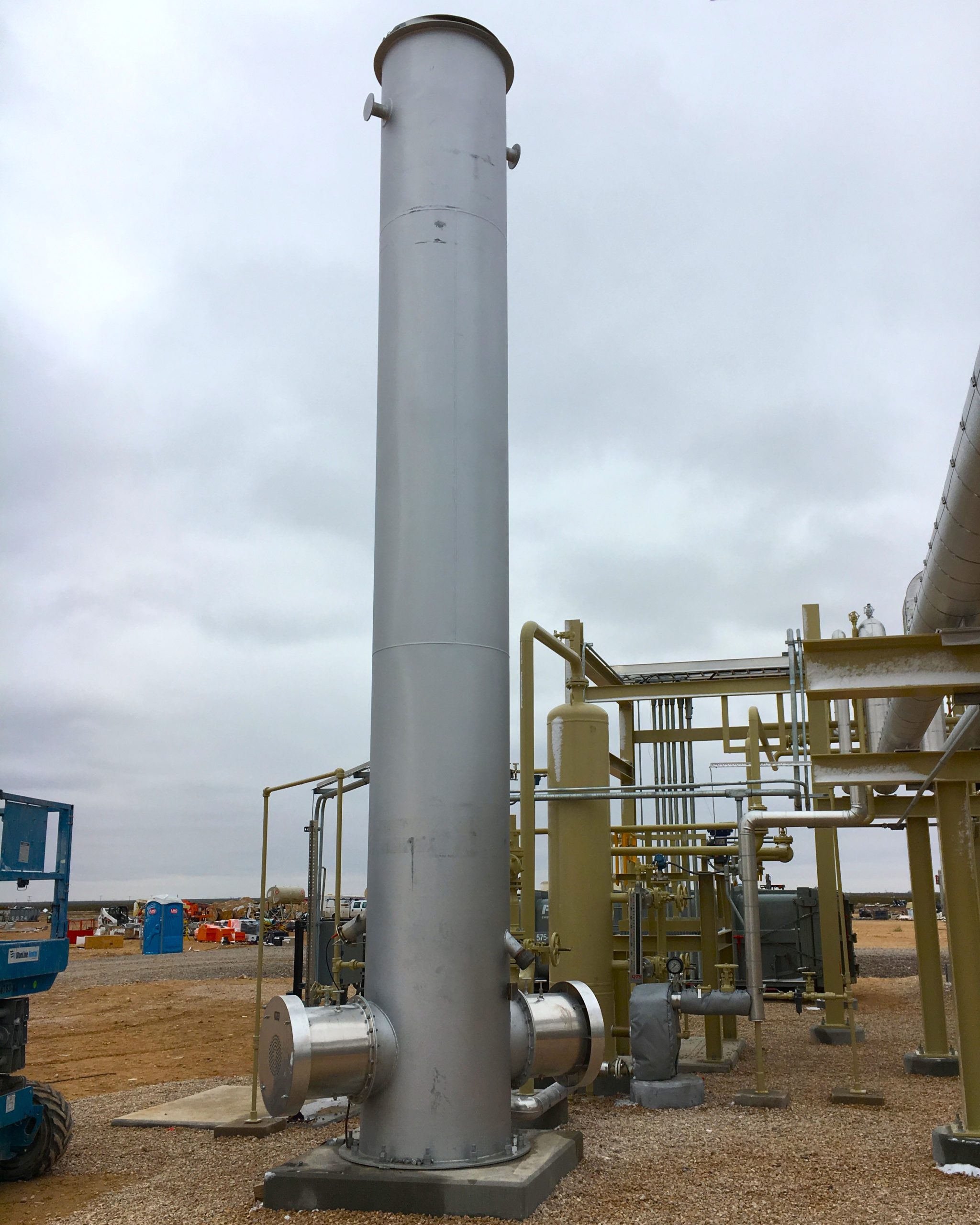
A thermal oxidizer is an enclosed combustion device that destroys harmful compounds in a waste gas stream by heating them to a high temperature in a controlled chamber. Unlike an open flare, it holds the gas in an insulated chamber long enough, and hot enough, to break the compounds down into inert byproducts, mainly water and carbon dioxide.
That makes it the right choice for streams a flare cannot handle cleanly: very low Btu gas, hazardous or chlorinated compounds, and applications where the permit demands the highest destruction efficiency. Hero builds direct-fired thermal oxidizers engineered for oil and gas waste streams. Send us your stream data and we will confirm whether a thermal oxidizer is what you need.
Maximum Destruction Rate
Thermal Oxidizers operate by Three T’s; Time, Temperature, and Turbulence. By heating a chamber to a temperature between 1400°F and 1800°F and then mixing the waste gases with air, the mixture resides in the chamber for sufficient time to decompose the gases into inerts such as water and carbon dioxide.
The HERO Process Solutions Thermal Oxidizer can guarantee a 99% – 99.9% DRE and are 40 CFR 60.18 compliant.
By utilizing the heat of the waste gas and controlling the amount of air going into the chamber, HERO’s Thermal Oxidizers can significantly reduce the amount of assist gas needed, up to 30% compared with regular flare consumption.
Is Your Waste Gas Too Lean or Hazardous to Flare?
Hero thermal oxidizers guarantee 99% to 99.9% DRE on low-Btu and hazardous streams and are 40 CFR 60.18 compliant. Send us your gas composition and flow and we will size the right unit.
Thermal Oxidizer vs Flare vs Combustor: Which to Choose
The three main ways to destroy waste gas trade off cost against destruction performance. A flare is the lowest-cost option and works well for higher-Btu streams that burn readily. A vapor combustor encloses the flame for a non-visible burn and higher efficiency. A thermal oxidizer goes furthest: it is engineered for the hardest streams, very low Btu, hazardous, or chlorinated, and for the highest destruction efficiency a permit can require. If a flare or combustor cannot meet your DRE, or your stream is too lean or too hazardous, a thermal oxidizer is the answer.
| Device | Best for | Typical DRE | Relative cost |
|---|---|---|---|
| Flare | Higher-Btu streams that burn readily | About 98% or greater | Lowest |
| Vapor combustor | Tank vapors, non-visible flame | Up to 99.9% | Moderate |
| Thermal oxidizer | Low-Btu, hazardous, highest-DRE permits | 99% to 99.9% | Highest |
Send us your gas data and we will tell you which fits.
Thermal Oxidizer Types and Where Hero Fits
Thermal oxidizers come in a few types. A direct-fired, or thermal, oxidizer burns the waste gas directly in the chamber and is the workhorse for oil and gas low-Btu and hazardous streams. Recuperative units add a heat exchanger to preheat the incoming gas, and regenerative thermal oxidizers (RTOs) use ceramic media beds to recover heat for high-flow, low-concentration industrial VOC abatement. Catalytic units lower the operating temperature with a catalyst.
Hero builds direct-fired thermal oxidizers tuned for oil and gas duty, where the priority is guaranteed destruction of difficult, low-Btu, or hazardous gas rather than VOC-abatement heat recovery. If you are not sure which type your application needs, tell us your stream and we will point you to the right one.
standard features
Applications and Industries Served
Thermal oxidizers are used wherever waste gas is too difficult for a standard flare. Common applications include low-Btu vent and process gas, hazardous and chlorinated streams, acid and tail gas, and high-DRE permit cases at oil and gas production facilities, gas processing and chemical plants, and landfill gas operations.
Operators across the Permian Basin, Oklahoma, Marcellus, and Haynesville plays use Hero thermal oxidizers to meet strict destruction and permit requirements. Tell us your application and we will confirm the fit.
Compliance and Safety Standards
A thermal oxidizer is usually installed to satisfy a regulation, so Hero builds compliance and safety in. Our thermal oxidizers are designed to 40 CFR 60.18 and support compliance with the NSPS OOOO program and NESHAP requirements for hazardous air pollutants, with guaranteed 99% to 99.9% destruction efficiency.
The automated burner management system follows recognized burner-safety practice (NFPA 86), with a flame arrestor and high-temperature shutdown for safe operation, and we can provide documentation for your permitting package. For more on the new-source rules, see our OOOOb/c overview.
Frequently Asked Questions
You likely need a thermal oxidizer if your waste gas has very low heat content below 200 Btu per standard cubic foot, contains hazardous compounds, or your permit demands destruction efficiency up to 99.9%. Flares and combustors work well for higher-Btu streams, but thermal oxidizers are engineered for difficult gas that needs high temperature, residence time, and turbulence for total destruction.
A thermal oxidizer is an enclosed combustion device that destroys waste gas by heating it in a controlled chamber. It works on the Three T’s: a chamber held at 1400 to 1800 degrees Fahrenheit, enough residence time, and turbulent mixing with air, which decomposes the gas into inert water and carbon dioxide at a guaranteed 99% to 99.9% destruction efficiency.
Hero thermal oxidizers are designed for DRE requirements up to 99.9%, low-Btu waste gases below 200 Btu per standard cubic foot, and hazardous gases needing advanced destruction. Applications include oil and gas production, gas processing and chemical plants, landfill gas, and any site where standard flaring or combustion cannot meet the required DRE or permit conditions.
Hero thermal oxidizers guarantee 99% to 99.9% DRE and are 40 CFR 60.18 compliant. That performance comes from the Three T’s: the chamber heats to 1400 to 1800 degrees Fahrenheit, waste gas mixes with controlled air, and the mixture resides long enough to fully decompose. Temperature control and automated PLC burner management hold the DRE across changing conditions.
Hero thermal oxidizers are designed to 40 CFR 60.18 and support NSPS OOOO and NESHAP compliance for hazardous air pollutants, with guaranteed 99% to 99.9% destruction efficiency. The automated burner management system follows recognized burner-safety practice (NFPA 86), with a flame arrestor and high-temperature shutdown. We can provide documentation for your permitting package.
Yes. Hero thermal oxidizers feature unlimited turndown as a standard capability, so the system holds its guaranteed destruction efficiency even when flow drops well below the design maximum. The automated burner management system adjusts chamber temperature and air ratios in real time to sustain residence time and turbulence at any operating point, with no bypass or supplemental equipment needed.
A thermal oxidizer typically costs more upfront than a standard flare because of the combustion chamber, ceramic lining, and automated PLC controls. However, Hero units can cut assist gas consumption by up to 30% versus a regular flare, and that fuel saving, plus guaranteed 99 to 99.9% DRE and 40 CFR 60.18 compliance, often makes it the more cost-effective long-term choice for low-Btu or hazardous streams.
Timelines depend on unit size, chamber configuration, and any custom engineering for your waste gas composition. Each system ships with standard features including a ceramic-lined stack, automated BMS with PLC, flame arrestor, and high-temperature shutdown. Our engineering teams in Kellyville, OK and Midland, TX support project planning and commissioning. Contact us for a manufacturing timeline.
Related Systems and Resources
A thermal oxidizer is one of several ways Hero controls and destroys waste gas. Explore related systems below.