
Hero Process Solutions provides vapor recovery units, BTEX condenser systems, enclosed vapor combustors, thermal oxidizers and process equipment for Marcellus and Utica Shale operators across Pennsylvania, West Virginia and Ohio. Because Appalachian operators capture rather than routinely flare, our equipment is engineered to reduce methane and VOC emissions at compressor stations, dehydration units, processing plants and storage tanks, supporting compliance with EPA OOOOb/OOOOc and state requirements from PA DEP, Ohio EPA and WV DEP.
The Marcellus & Utica Shale: capture-first gas production
The Marcellus Shale is the largest natural-gas-producing region in the United States, anchoring the Appalachian Basin across Pennsylvania, West Virginia and eastern Ohio, with the deeper Utica Shale underlying much of the same footprint. Together they have reshaped how gas moves in the U.S. and how the industry handles emissions, because the production story here is fundamentally different from the oil-driven basins to the south and west.
Two geographies matter for equipment selection. Northeast Pennsylvania (counties such as Susquehanna, Bradford, Tioga, Wyoming, Sullivan and Lycoming) produces dry gas, with relatively simple compositions and limited liquids. Southwest Pennsylvania (Washington, Greene, Westmoreland), northern West Virginia (Marshall, Wetzel, Doddridge, Tyler) and eastern Ohio (Belmont, Monroe, Noble) produce wet, liquids-rich gas with condensate and NGLs, which feeds processing fractionators and downstream petrochemicals.
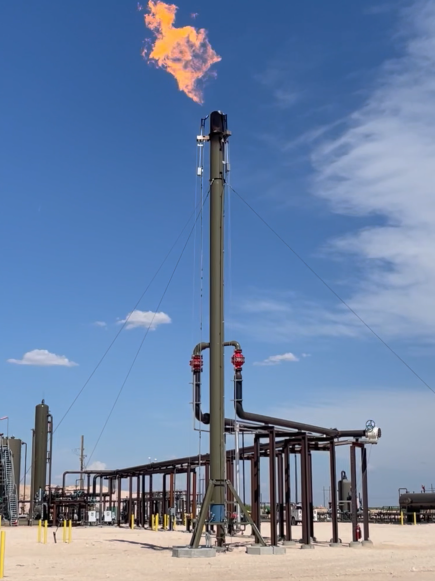
The other defining feature of Appalachia is its midstream footprint. Hundreds of compressor stations, transmission compressor stations and natural gas processing facilities sit between the wellpads and the interstate pipelines, and they are where most of the emissions equipment lives. Combustors at glycol dehydration units, vapor recovery at tank batteries, thermal oxidizers for high-DRE service and BTEX condensers for still vents are the everyday workload, not open elevated flaring.
| Attribute | Marcellus & Utica detail |
|---|---|
| Gas profile | Dry gas in NE PA; wet, liquids-rich gas with condensate and NGLs in SW PA, northern WV and eastern OH; Utica underlies much of the same area |
| Key areas | NE PA (Susquehanna, Bradford, Tioga, Wyoming, Sullivan, Lycoming); SW PA (Washington, Greene, Westmoreland); northern WV (Marshall, Wetzel, Doddridge, Tyler); eastern OH (Belmont, Monroe, Noble) |
| Regulatory posture | Capture-first across the region; midstream and processing dominate the emissions footprint |
| Pennsylvania regulators | PA Department of Environmental Protection (DEP); Environmental Quality Board (EQB) VOC requirements covering existing oil and gas sources |
| Ohio and WV regulators | Ohio EPA (Division of Air Pollution Control); West Virginia DEP (Division of Air Quality) |
| Federal overlay | EPA 40 CFR 60 Subpart OOOOb / OOOOc, methane and VOC standards |
| Primary HPS solutions | Vapor recovery units, BTEX condensers, enclosed vapor combustors, thermal oxidizers, knockouts and separators, plus rentals and field services |
Marcellus & Utica emissions challenges
Methane and VOC control at compressor stations
Compressor stations are everywhere across the Marcellus, and they are a primary focus of state and federal emissions rules. Enclosed combustors, thermal oxidizers and properly designed vent capture all play a role. Hero builds the destruction and recovery equipment matched to typical compressor-station duty cycles.
BTEX and VOC from glycol dehydration
Glycol dehydration units used to dry produced gas vent BTEX and other VOC compounds at the still. BTEX condenser systems recover those compounds for sales or reinjection rather than releasing them, which directly addresses the most-scrutinized emissions stream at many sites.
Tank-battery vapors at wellpads and processing plants
Even in a capture-first region, tank-battery vapors and intermittent vent streams have to be managed. Vapor recovery units capture vapors for beneficial use; where capture is not practical, enclosed vapor combustors destroy them at high efficiency with a hidden flame.
Wet vs dry gas equipment mismatch
Equipment that works in NE Pennsylvania’s dry gas streams is not necessarily the right answer in SW Pennsylvania, northern West Virginia or eastern Ohio, where the gas is wet and the liquids handling matters as much as the combustion itself. Hero engineers the separation and combustion package together.
PA VOC reduction on existing sources
Pennsylvania’s regulatory direction has pushed VOC reduction onto existing oil and gas sources, not just new builds. That means retrofits, controller replacements, and combustion-equipment upgrades across an installed base of compressor stations and processing facilities. Hero’s aftermarket team supports that work.
Appalachian emissions compliance & how Hero helps
General guidance, not legal advice. State rules differ across PA, WV and OH and evolve frequently. Confirm current requirements with your regulator; Hero’s role is to supply equipment that helps you meet whichever standard applies.
VOC requirements on existing sources
Pennsylvania has moved beyond new-source-only rules and applied VOC requirements to existing oil and gas infrastructure, including compressor stations, transmission compressors and natural gas processing facilities. Hero supports operators with EPA-listed enclosed combustors, BTEX condenser systems, vapor recovery units and thermal oxidizers sized to the duty cycle of these existing assets.
State air permitting & VOC requirements
Ohio’s Division of Air Pollution Control and West Virginia’s Division of Air Quality administer state-level air permitting and VOC requirements for upstream and midstream operations across the wet-gas portion of the play. Equipment selection tracks the same logic: capture first, destroy with high efficiency where capture is not practical, and document compliance with clean technology.
Methane & VOC standards
Federal standards under 40 CFR 60 Subpart OOOOb/OOOOc set methane and VOC requirements that overlay state programs across the entire Appalachian footprint. Hero’s equipment and our OOOOb compliance resources support producers and midstream operators working toward these standards.
Vapor recovery & combustion solutions for the Marcellus
Each Hero product family maps to a specific Appalachian need.
Vapor Recovery Units
Capture tank-battery and process vapors for sales, fuel or reinjection. The default first move under a capture-first regulatory posture.
BTEX Condenser Systems
Recover BTEX and VOC compounds from glycol dehydration still vents at processing facilities and compressor stations.
Enclosed Vapor Combustors
High-efficiency, smokeless destruction with a concealed flame for sites where capture is not practical, especially near sensitive receptors.
Thermal Oxidizers
High destruction efficiency where the strictest VOC limits apply, typical at larger processing and compressor facilities.
Emergency Utility Flares
Backup destruction during processing upsets, blowdowns, completions and turnarounds at midstream sites.
Separators & Liquid Knockouts
Critical for wet-gas streams in SW PA, northern WV and eastern OH; protect downstream combustion equipment from liquids.
Air-Assist & Sonic Flares
Available where elevated flaring is required, with smokeless designs to satisfy operator and regulator expectations.
Rentals
Bridge temporary or emergency needs at compressor stations, processing facilities, and pad sites during turnarounds or capacity gaps.
Field Services & Aftermarket
Install, commission, inspect, retrofit and maintain equipment across the Appalachian footprint, including PA DEP retrofit work.
Appalachian field service, rentals & rapid response
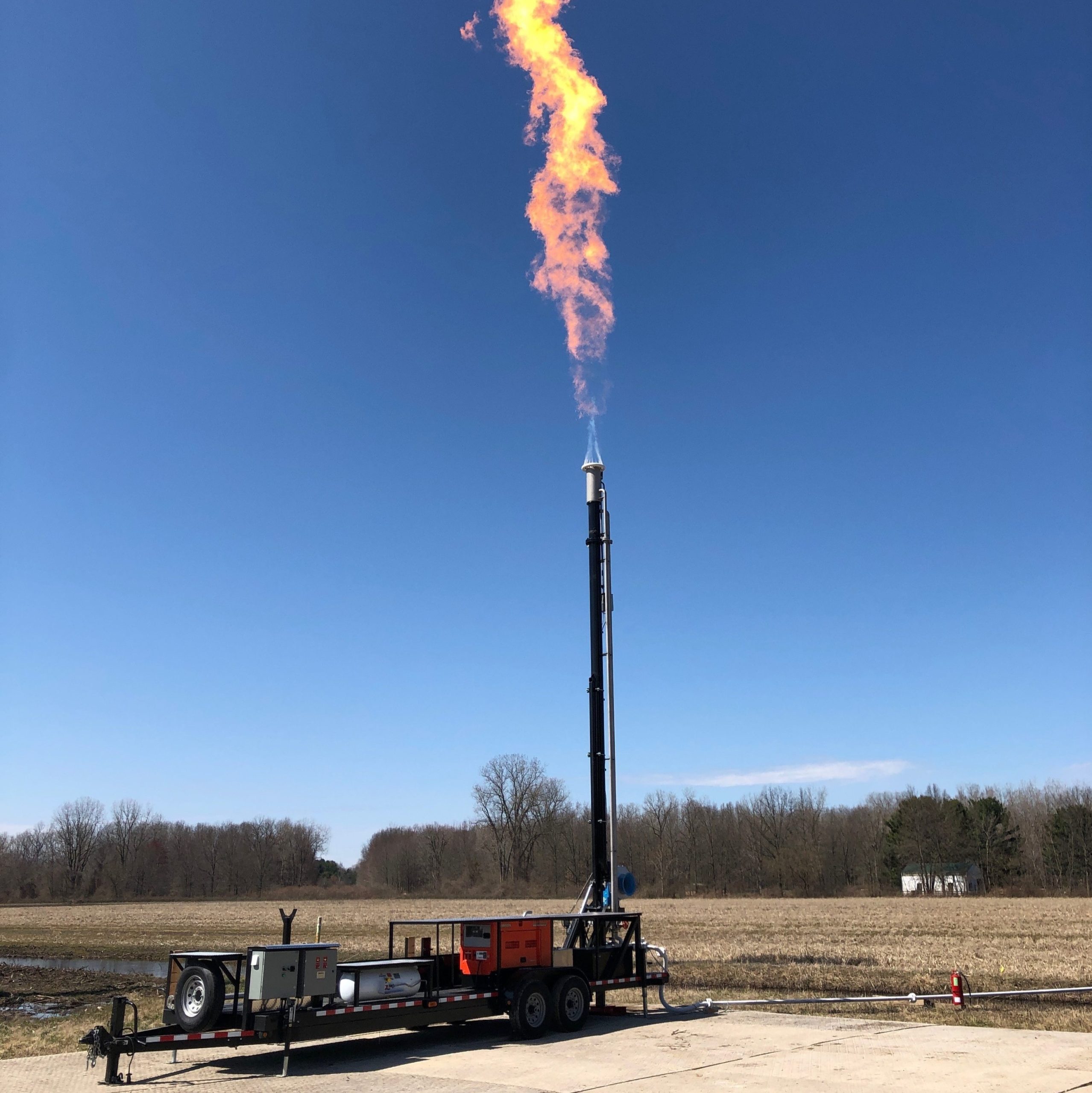
Hero Process Solutions supports Marcellus and Utica operators across Pennsylvania, West Virginia and Ohio from our manufacturing and engineering base, with field crews mobilized to compressor stations, processing facilities, gas plants and pad sites for installation, commissioning, inspection, troubleshooting and emergency support.
Equipment is built and tested at our headquarters and shipped into the region, with custom designs engineered to the specific gas conditions and regulatory profile of the site. When timelines are tight, our rental fleet of combustion and recovery equipment lets operators put compliant equipment in service quickly during completions, turnarounds, retrofits or unexpected capacity gaps.
Why Marcellus operators choose Hero Process Solutions
Built for capture-first compliance
Vapor recovery, BTEX condensers, enclosed combustors and thermal oxidizers, not just open flares. Equipment matched to how Appalachian operators actually manage emissions.
Engineering depth
A combustion-engineering team with 15 to 30 years of individual experience and 100+ years combined, designing systems for your exact gas composition and flow.
Proven compliance
More enclosed combustors on the EPA-approved list than any other vendor, an advantage when retrofits and permits are under review.
Three-state field support
Mobilized across Pennsylvania, West Virginia and Ohio for installation, retrofits, commissioning and aftermarket service on compressor stations, processing facilities and pad sites.
Vapor recovery & combustion in the Marcellus
- Hero Process Solutions supports Marcellus and Utica operators across Pennsylvania, West Virginia and Ohio.
- The Appalachian emissions story is capture-first; equipment selection prioritizes vapor recovery, BTEX condensers, enclosed combustors and thermal oxidizers over open flaring.
- NE Pennsylvania is dry gas, while SW PA, northern WV and eastern OH are wet and liquids-rich; equipment is sized to the actual stream.
- State requirements from PA DEP, Ohio EPA and WV DEP plus federal EPA OOOOb/OOOOc drive ongoing retrofits on existing midstream and upstream sites.
- Hero offers more enclosed combustors on the EPA-approved list than any other vendor, plus field services and aftermarket for retrofit work.
Marcellus Shale vapor recovery & combustion FAQs
Why does the Marcellus rely on vapor recovery and enclosed combustion instead of open flaring?
What equipment is typical at a Marcellus compressor station or gas processing facility?
How does Hero handle wet, liquids-rich gas in SW Pennsylvania, West Virginia and Ohio?
Does Hero support retrofit work on existing Pennsylvania compressor stations and processing facilities?
Does Hero serve operators in Ohio and West Virginia as well as Pennsylvania?
Can Hero supply emergency or rental combustion equipment to Marcellus sites?
Does Hero help with EPA OOOOb compliance in the Marcellus and Utica?
What is the difference between a BTEX condenser and an enclosed combustor for Marcellus dehydration units?
Request a Quote for Marcellus Vapor Recovery & Combustion Equipment
Tell us your gas composition, flow, site type (compressor station, processing facility, pad battery) and state, and our combustion engineers will recommend the right vapor recovery, BTEX, combustor or thermal oxidizer package for your Marcellus or Utica site. Standard systems ship from stock; custom builds are engineered to your specs.
Last reviewed: May 2026. Review quarterly or on any state/federal rule change.