

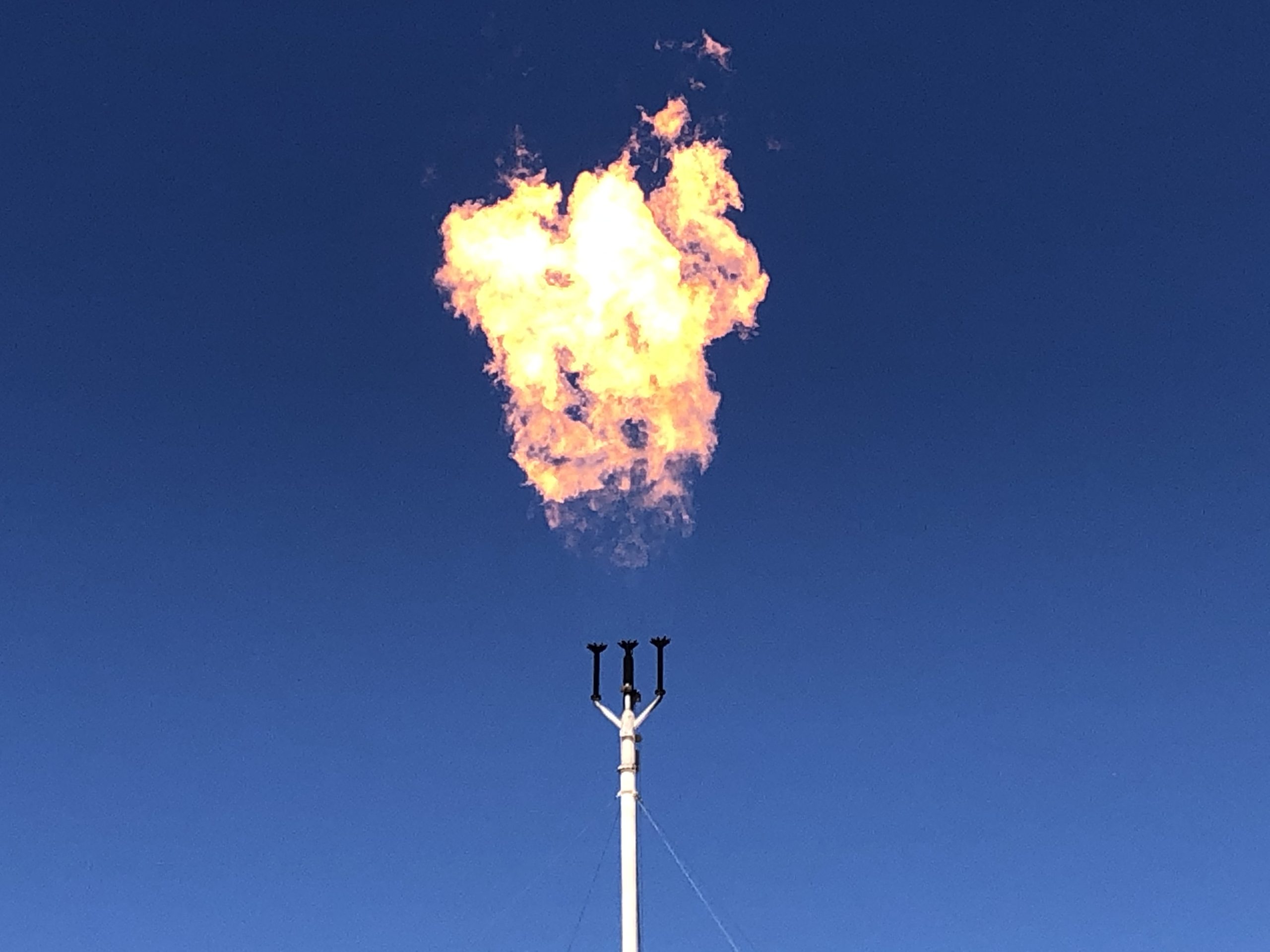
When you need to combust excess hydrocarbons without smoke, without utility blowers, and without burning through your maintenance budget, the sonic flare is one of the most reliable tools in your facility’s emissions control arsenal. At the heart of the highest-performing sonic designs is a principle that has been applied to flare tips for decades: the Coanda effect.
This article explains what a sonic flare is, how the Coanda effect works inside a flare tip, and why this technology consistently outperforms conventional open-pipe and sub-sonic flare designs when it comes to combustion efficiency and regulatory compliance.
What Is a Sonic Flare?
A sonic flare is a pressure-assisted flare system that uses the energy of the waste gas stream itself — rather than external steam or air injection — to achieve smokeless combustion. The defining characteristic of a sonic flare is that gas exits the flare tip at or near the speed of sound (Mach 1.0) under design conditions.
That high exit velocity does more than just increase turbulence. It creates a low-pressure zone around the gas stream that actively pulls large volumes of ambient air into the combustion zone. This self-induced air mixing is what enables sonic flares to burn cleanly without blowers or steam rings.
Waste gas pressure requirements typically range from 15 to 100 psig depending on gas composition and flare tip design. For variable orifice (Coanda-style) tips, a minimum of 30 psig is generally recommended to maintain reliable smokeless performance across the full turndown range.
The Coanda Effect Explained
The Coanda effect is a fluid dynamics phenomenon where a moving gas jet tends to follow and adhere to an adjacent curved surface rather than separating from it. Named after Romanian aerodynamicist Henri Coanda, the principle has been applied to flare tip design since the 1970s.
In a Coanda-effect flare tip, waste gas exits through an annular slot at the base of a tulip-shaped tip body. As the gas follows the curved surface of the tulip, it is redirected from a radial to a vertical direction. During this redirection, the high-velocity jet creates a low-pressure zone that draws ambient air into the combustion envelope — without any mechanical blowers or steam injection.
This passive air induction is highly effective. Air-to-gas ratios achievable through Coanda-effect designs can reach 20:1 or higher, which is significantly greater than what conventional open-pipe designs can achieve through natural draft alone. The result is a combustion zone with consistent excess air and thorough fuel-air mixing, which is why Coanda sonic flares achieve destruction and removal efficiencies (DRE) of 98% or greater under design conditions.
Key Performance Advantages Over Conventional Flares
The performance advantages of a well-designed sonic flare with Coanda-effect tips over a standard open-pipe or sub-sonic design fall into four categories.
Smokeless combustion without utility consumption
Steam-injected and air-assisted flares require a continuous supply of utilities to maintain smokeless combustion. A pressure-assisted sonic flare uses only the energy available in the waste gas stream. When inlet pressure is sufficient, this eliminates the operating cost and maintenance burden of steam generation or blower operation. For offshore platforms and remote production sites where utility infrastructure is limited, this is a decisive advantage.
Wide smokeless turndown range
Variable orifice Coanda tip designs, which use a movable inner cone to adjust the annular slot area as flow varies, maintain smokeless performance across a wide range of operating conditions. Published turndown ratios for high-quality variable slot designs reach 300:1 or greater, meaning these tips can handle both the minimum continuous operational flow and a major relief event from the same tip assembly without loss of smokeless performance.
Shorter flame length and reduced radiation
Shorter flames translate directly to reduced thermal radiation at grade level and on surrounding structures. This allows shorter stack heights to meet site radiation limits, which reduces structural material costs; and it reduces wind-induced flame pull-down, which improves reliability during high-wind conditions common on offshore platforms and open production pads.
According to Oil & Gas Journal analysis of Coanda tip designs, the combination of shorter flame length and more efficient combustion also results in lower overall radiation levels compared to conventional steam-injected designs for equivalent flow conditions.
Sonic Flares vs. Air-Assisted Flares: When to Choose Each
Both technologies can achieve 100% smokeless operation. The decision between a sonic flare and an air-assisted flare depends primarily on available gas pressure and expected flow range.
If your facility has consistent gas pressure above 30 psig at the flare inlet, a pressure-assisted sonic flare with Coanda-effect tips is typically the more cost-effective long-term choice. The absence of blower infrastructure simplifies mechanical systems and reduces maintenance requirements.
Air-assisted flares are the better choice when inlet pressure is below 15 psig, variable, or insufficient to sustain sonic velocity across the expected flow range. They are also commonly used for applications where gas composition makes pressure-assisted designs impractical — for example, in refinery or chemical plant low-pressure relief headers where heavier hydrocarbons require staged combustion air control.
Regulatory Compliance and Emissions Reporting
Sonic flares used in regulated applications must comply with EPA 40 CFR Part 60, including 40 CFR 60.18, which establishes minimum exit velocity, net heating value, and presence-of-flame requirements. Properly designed sonic flares operating within their specified pressure range are built to meet these requirements.
For facilities subject to New Source Performance Standards (NSPS) or National Emission Standards for Hazardous Air Pollutants (NESHAP) flare rules, Coanda-effect sonic tips provide a technically sound basis for DRE claims above 98%, which can reduce emission inventory values and associated regulatory obligations.
Frequently Asked Questions
What minimum pressure do I need to operate a sonic flare effectively?
Most sonic flare designs require a minimum of 15 psig at the flare tip inlet for standard fixed-orifice configurations, with variable slot Coanda designs typically needing 30 psig or more to maintain smokeless turndown across the full flow range. Gas composition also affects the minimum pressure threshold.
Can a Coanda flare handle liquid carryover in the gas stream?
Yes. Coanda flare tips are engineered to handle gas streams with entrained liquid hydrocarbons — typically up to 25% by mass of the total stream — without losing flame stability or smokeless performance. This makes them practical for production applications where liquid slugging can occur.
Does a sonic flare require an auxiliary ignition system?
Yes. EPA regulations require a continuous pilot flame on any regulated flare. Sonic flares from reputable manufacturers are equipped with pilot ignition systems designed to maintain stable flame under sudden high-velocity venting conditions where conventional pilots may fail.
How does EPA 40 CFR 60.18 apply to sonic flare operation?
40 CFR 60.18 establishes minimum exit velocity requirements, net heating value thresholds, and presence-of-flame requirements for regulated flares. Sonic flares designed and operated at the specified pressure ranges are generally compliant, but site-specific factors including flare gas composition and flow variability should be reviewed with your engineering team.
What is the expected service life of a Coanda flare tip?
Service life depends on tip material selection, gas composition, and operating conditions. Tips manufactured in 310S or Alloy 800H stainless steel are typical for high-temperature applications. Properly specified and maintained sonic flare tips routinely achieve multi-year service life before requiring replacement.
Whether you are evaluating new equipment for a greenfield facility or looking to replace an aging steam-injected system, Hero Process Solutions engineers are available to review your gas composition, pressure profile, and flow range to determine whether a sonic or Coanda-style flare is the right fit. Contact our team or visit our sonic flares page for specifications and configuration options.