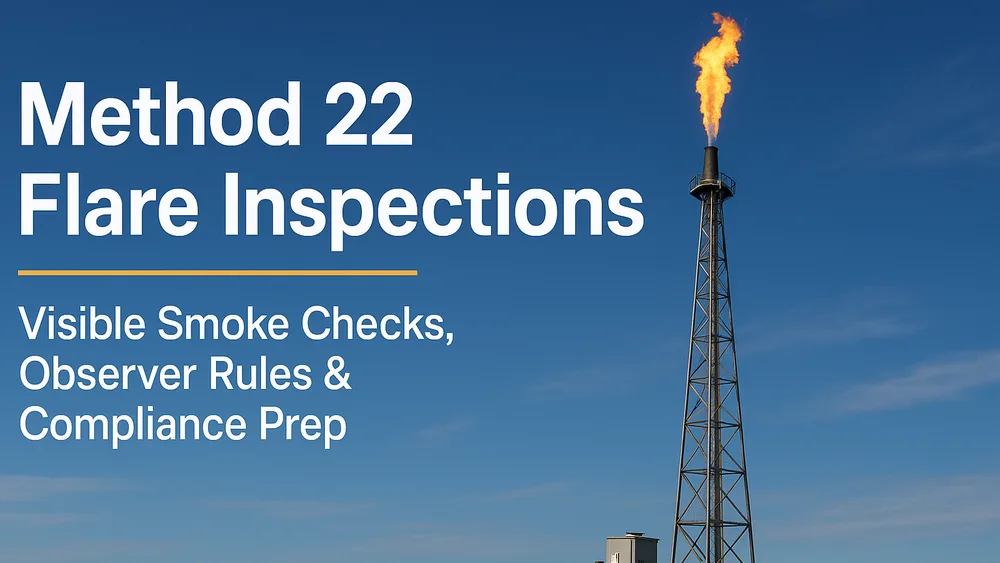
- What EPA Method 22 measures on a flare, and what it does not
- How the “5 minutes in 2 hours” smoke limit in 40 CFR 60.18 works
- How an observer sets up, times the observation and keeps records
- The most common reasons a flare shows smoke during an inspection
- A pre-inspection checklist for operators
A flare can look perfectly healthy from the control room and still fail a visible smoke check in the field. Method 22 is the test regulators use for that check. It needs no instruments, only a trained observer and two stopwatches, which makes it easy to run and easy to fail if a site has not prepared. This guide explains what the method requires, how the smoke limit for flares works, and what operators can do before the observer arrives.
Hero Process Solutions field services include Method 22 inspections, onsite equipment inspections, start-up and commissioning support, and compliance checks for EPA OOOOa/b/c and API 537, with technicians based in Oklahoma, Texas and New Mexico. The points below come from that kind of fieldwork and from the text of the federal method itself.
Method 22 is an EPA test method in which a trained observer watches a flare, without instruments, and uses a stopwatch to record how long visible smoke is present. For flares covered by 40 CFR 60.18, the observation period is 2 hours, and the flare must show no visible emissions except for periods not exceeding a total of 5 minutes during any 2 consecutive hours.
What Method 22 Measures
Method 22 measures time, not density. The observer records only whether smoke is visible and for how long. It does not ask the observer to judge how dark the smoke is, and that is why the method does not require the observer certification used for opacity readings under Method 9. The method still expects a trained observer who understands how background contrast, lighting, wind and condensing water vapor affect what can be seen.
Two definitions matter for flares. Smoke is a pollutant generated by combustion in the flare and occurring immediately downstream of the flame. Smoke seen inside the flame but not downstream of it does not count. Condensed water vapor, such as steam from a steam-assisted tip, is not counted as an emission either.
The Smoke Limit in 40 CFR 60.18
For flares that must meet 40 CFR 60.18, the rule has two requirements that Method 22 checks directly:
- No visible emissions, except for periods not exceeding a total of 5 minutes during any 2 consecutive hours.
- A flame present at all times. The presence of a pilot flame must be monitored with a thermocouple or equivalent device.
The rule sets the observation period at 2 hours and requires Method 22 to be used for the visible emission check. Which regulation applies to your flare depends on the subpart that covers the facility, so confirm your applicable subpart and permit conditions before you plan a test. Our guide to EPA flare monitoring rules and OOOOb covers how these rules fit together.
How the Observer Runs the Test
- Pick the position. The method recommends standing at least 15 feet and no more than a quarter mile from the emission source, with a clear view of the flare tip. Outdoors, the sun should not shine directly into the observer’s eyes.
- Fill in the field record. The data sheet captures company, industry, process unit, observer name and affiliation, date, estimated wind speed and direction, and sky condition. The observer also sketches the unit and marks the observer’s position relative to the source and the sun. Dated digital photographs can support these records.
- Run two stopwatches. One stopwatch tracks the length of the observation period. The second runs only while smoke is visible, and its total is the emission time.
- Take rest breaks. The observer does not watch continuously for more than 15 to 20 minutes. On longer observations the method calls for a break of 5 to 10 minutes after every 15 to 20 minutes, or for two observers to alternate.
- Stop if the view is lost. If dust or another source blocks the view so the observer questions the validity of the reading, the observation is ended and the reason is written on the data form.
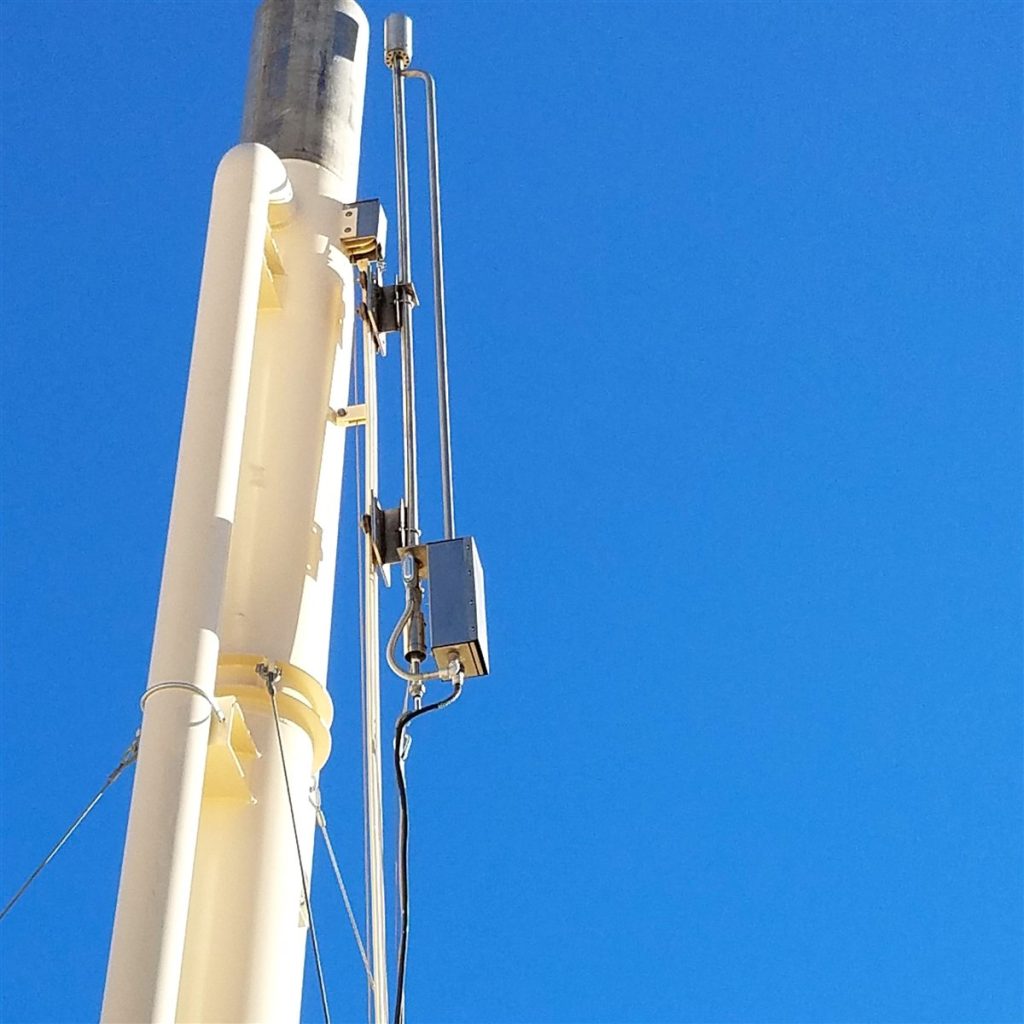
Why Flares Show Smoke During an Inspection
Smoke is a sign of incomplete combustion. In the field the causes usually fall into a short list:
- Not enough assist. Heavier hydrocarbons need air or steam mixed in to burn cleanly. An air assist flare with a blower that is not ramping with gas flow, or a VFD that is mistuned, will smoke at turndown. See our air assisted flare troubleshooting guide.
- Wrong tip or fuel gas for the load. A gas assist flare sized for a different composition can smoke when the gas gets heavier. Our gas assisted flare sizing guide explains the trade-offs.
- Liquid carryover. Liquids reaching the tip burn badly and produce heavy smoke. A properly sized liquid knockout system protects the flare from this.
- Tip damage or erosion. A worn or damaged tip disturbs the flame and the mixing. Read about flare tip erosion, detection and replacement.
- Pilot trouble. An unstable or lost pilot lets the main flame flicker out or burn poorly. Our write-up on pilot monitoring and auto-relight systems covers what to check.
- Unusual gas flow. Low flow, surges and process upsets change how the flame behaves from one hour to the next, which is why a 2 hour window matters.
Pre-Inspection Checklist for Operators
- Confirm the applicable subpart and permit conditions, and what observation period they require.
- Check that the pilot flame is lit and that the thermocouple or equivalent monitor reads correctly and is logged.
- Walk the flare for visible tip damage and check the assist system (blower, VFD, fuel gas or steam) through its normal range.
- Drain the knockout vessel and confirm level controls work, so no liquid reaches the tip.
- Review recent gas composition and flow data for changes that could make the flare run heavier or at lower turndown.
- Pick a safe observation spot with a clear sightline, and check the planned time of day against the sun position.
- Make sure operators and the observer agree on the start time, the contact person and how upsets during the test will be logged.
- Keep the completed field data sheet and photographs with your compliance records.
If a flare fails or comes close, treat the result as a diagnostic. Match the time of the smoke to the flow and assist data, then correct the cause. Replacement tips, pilots, blowers and flame arrestors are available through the Hero aftermarket parts program, and technicians can handle the work in the same visit as the inspection.
You can read the complete method text and the related test methods on the EPA Emission Measurement Center test methods page, and the current flare rules in 40 CFR 60.18.
Tell us the flare type, tip, assist system and where it is located, and we will schedule a visit. Contact Hero Process Solutions or call (918) 941-2166.
Frequently Asked Questions
Does a Method 22 observer need to be certified?
Method 22 does not require the Method 9 opacity certification, because it records only whether smoke is visible and for how long. The observer must still be trained in how lighting, background, wind and condensing water vapor affect visibility.
How long is a Method 22 flare observation?
Under 40 CFR 60.18 the observation period for flares is 2 hours. Method 22 itself says an observation period is never shorter than 6 minutes, and the length is set by the regulation that applies to the source.
Is steam from a steam-assisted flare counted as smoke?
No. Condensed water vapor is not considered an emission under Method 22. The observer records only smoke, which is defined as a combustion pollutant occurring immediately downstream of the flame.
How much smoke is allowed during the test?
For flares covered by 40 CFR 60.18, visible emissions may not exceed a total of 5 minutes during any 2 consecutive hours. Always confirm the limit in your own subpart and permit.
Can Hero Process Solutions perform Method 22 inspections?
Yes. Method 22 inspection is part of Hero field services, along with onsite inspections, preventive maintenance, emergency repairs, start-up and commissioning support, and compliance checks for OOOOa/b/c and API 537.