
Flare Systems for Oil & Gas Production — OOOOb Ready. Ships in Weeks.
From wellhead pads to gas processing plants, Hero Process Solutions delivers EPA-compliant combustion equipment built for the realities of upstream and midstream oil & gas.
Variable Flow From Wellhead to Blowdown
Oil & gas production flares must handle turndown ratios from steady purge flow all the way to emergency blowdown events, sometimes a 100:1 swing. Standard utility flares go unstable or extinguish at low flow.
OOOOb Compliance at Remote Sites
EPA OOOOb (40 CFR 60 Subpart OOOOb) requires 95% VOC destruction for new and modified wellsite combustion devices. Older utility flares typically fall short of this standard.
Remote Location Constraints
Many Permian Basin, Mid-Con, and Appalachian wellpads have no utility steam, no instrument air, and limited electrical infrastructure, ruling out most smokeless flare designs that depend on utility connections.
Hydrogen Sulfide and Sour Gas
Sour gas streams containing H2S require materials selection (310SS tip internals, Incoloy pilots), minimum combustion temperature compliance, and SO2 visibility calculations per state air permits.
Short Project Timelines
Upstream operators frequently need flare systems in 4 to 8 weeks for new well completions, not the 16 to 24 week delivery cycle typical of large combustion equipment suppliers.
Ready to Configure Your Oil & Gas Combustion System?
Share your gas composition, flow rate, and permit conditions. We confirm the right flare or combustor approach within 48 hours.
Request a Free Consultation →Five Combustion Solutions. One Supplier.
Every product is engineered for oil & gas operating conditions, not adapted from a commercial HVAC or industrial process catalog.

Air-Assist Elevated Flares
The workhorse for upstream wellsite combustion. High-pressure air injection at the flare tip promotes turbulent mixing for smokeless combustion of heavy hydrocarbon streams without steam or utility connections.

Sonic (Coanda) Flares
Pressure-assisted sonic flare tips use high-exit velocity gas to aspirate combustion air by the Coanda effect, achieving smokeless combustion over a wide flow range without an external air supply. Ideal for gas plants and compressor stations with pressurized waste gas.
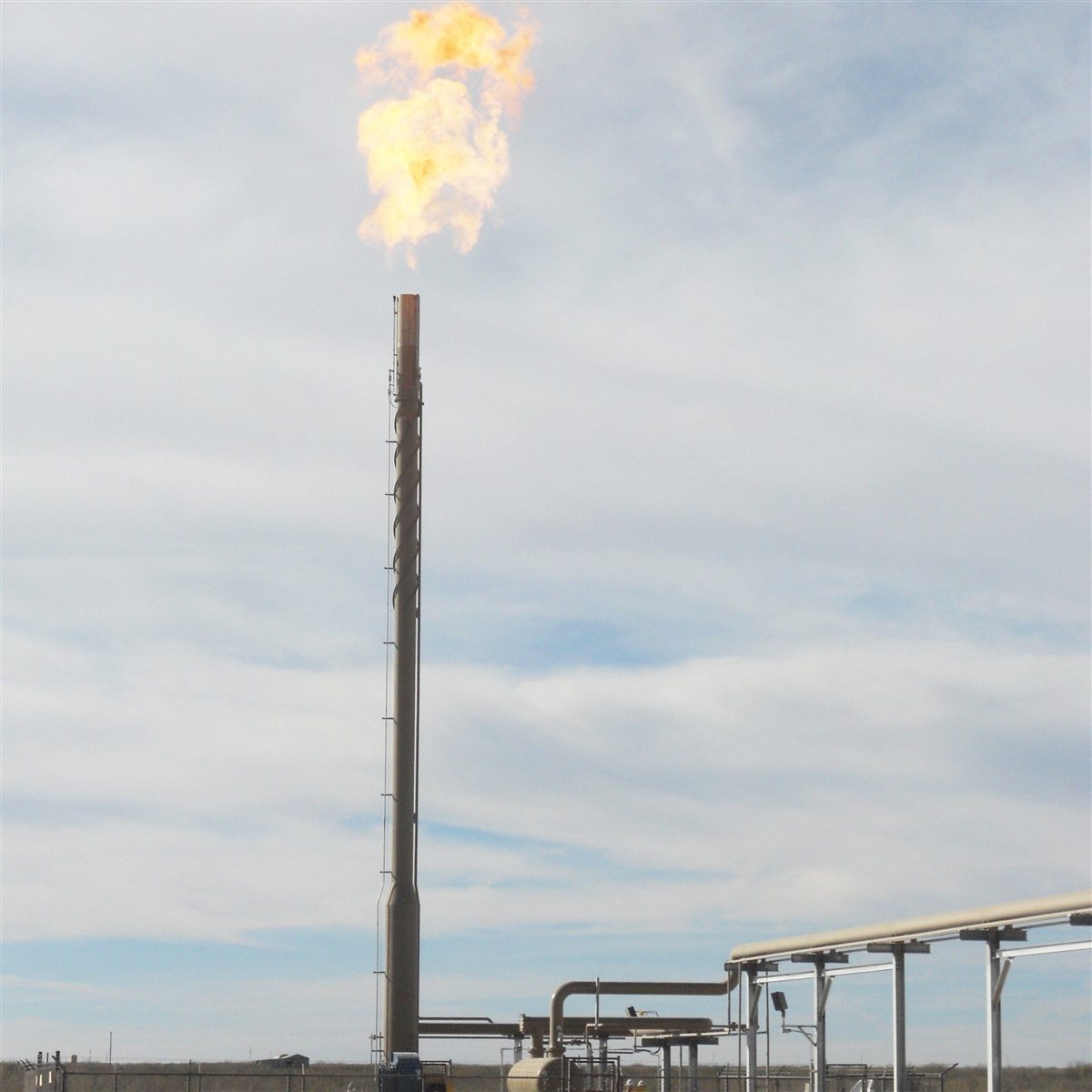
Enclosed Ground Flares
When visible flames are prohibited by permit, community proximity, or GOSP operational requirements, enclosed ground flares combust waste gas inside a refractory-lined chamber. No visible flame. DRE exceeds 99.5%.
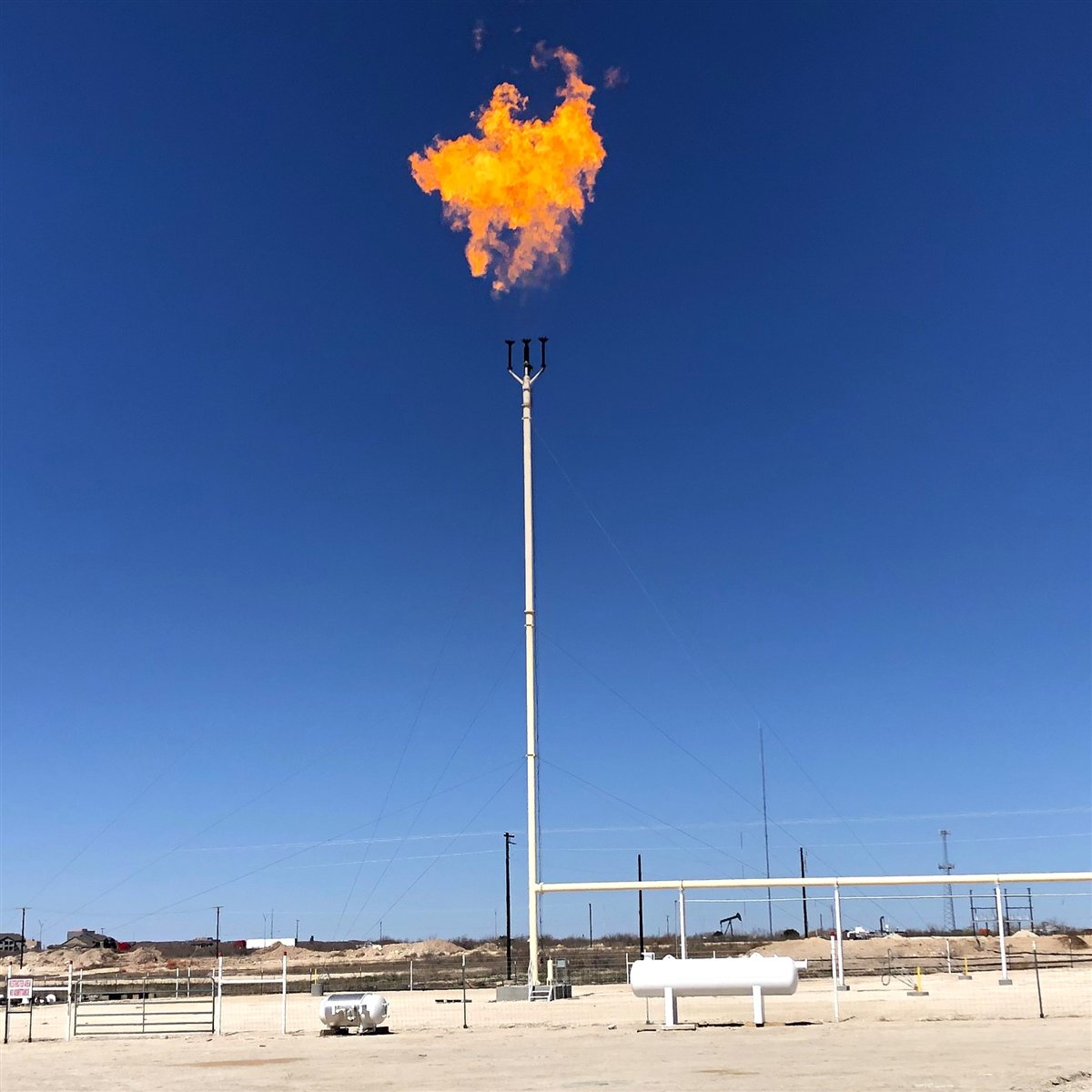
Vapor Recovery Units & Thermal Oxidizers
When the economics favor capturing gas rather than burning it, HPS VRUs return sales-quality gas to the pipeline. When destruction is required, our direct-fired thermal oxidizers achieve DRE >99.9%.
From Data Sheet to Deployed System in 5 Steps
HPS engineering follows a disciplined sizing and design process. Every system is calculated for your specific gas composition, flow rates, and site conditions.
Gas Analysis
You provide well test data, gas composition (BTU/scf, MW, H2S ppm), and design flow cases: normal, upset, blowdown.
Sizing Calc
We run API RP 521 heat content checks, exit velocity, radiation heat flux at grade, and 40 CFR 60.18 compliance margin.
Product Selection
We select the product type, tip size, structural option (self-supported, guyed, skid), and assist method appropriate to your site.
Fabrication
Oklahoma-based fabrication. Standard alloy stainless tips. Pilot assemblies. Control panels if needed. Full QC documentation.
Delivery + Docs
System ships with DRE basis, heat content calc, pilot flame spec, compliance summary, and O&M manual.
OOOOb, NSPS, NESHAP Decoded for Your Site
HPS systems are designed to the exact combustion efficiency and operating parameter requirements of each regulation.
| Regulation | Requirement | Key Parameter | HPS Products | Status |
|---|---|---|---|---|
| 40 CFR 60 Subpart OOOOb EPA NSPS for O&G 2024 | 95% VOC reduction for new/modified wellsite combustion devices | 95% VOC DRE, continuous pilot | Air-Assist, Sonic, Enclosed, Thermal Oxidizer | MEETS |
| 40 CFR 60.18(c) General Combustion Standards | Net heating value ≥300 BTU/scf at tip. Exit velocity limits apply. | NHV ≥300 BTU/scf; exit vel ≤60 ft/s unassisted | All HPS flare products | MEETS |
| 40 CFR 63.11(b) NESHAP Pilot Requirements | Continuous pilot with automatic reignition. Flame detection required for MACT-regulated sources. | Continuous burning pilot, UV/IR flame detector option | All HPS flare products | MEETS |
| API RP 521 (7th Ed.) Pressure Relieving Systems | Radiation heat flux ≤1,500 BTU/hr/ft² at grade-level personnel locations. | Heat flux calculation, Mach limit for sonic tips | All elevated flare products | DESIGNED TO |
| API Std 537 (3rd Ed.) Flare Details | Flare tip design, pilot design, seal drum design, ignition system requirements. | Tip material spec, pilot gas pressure | Air-Assist, Sonic | FOLLOWS |
| NFPA 85 / 87 Combustion System Fundamentals | Applies to enclosed combustion devices. Requires BFMS, purge interlocks, O2 monitoring for certain configurations. | Burner management system, safety interlocks | Enclosed Flares, Thermal Oxidizers | ON REQUEST |
Note: Regulatory applicability depends on source category, permitting history, and state implementation plans. Operators should consult their environmental counsel for site-specific determinations.
Applications Across the Oil & Gas Value Chain
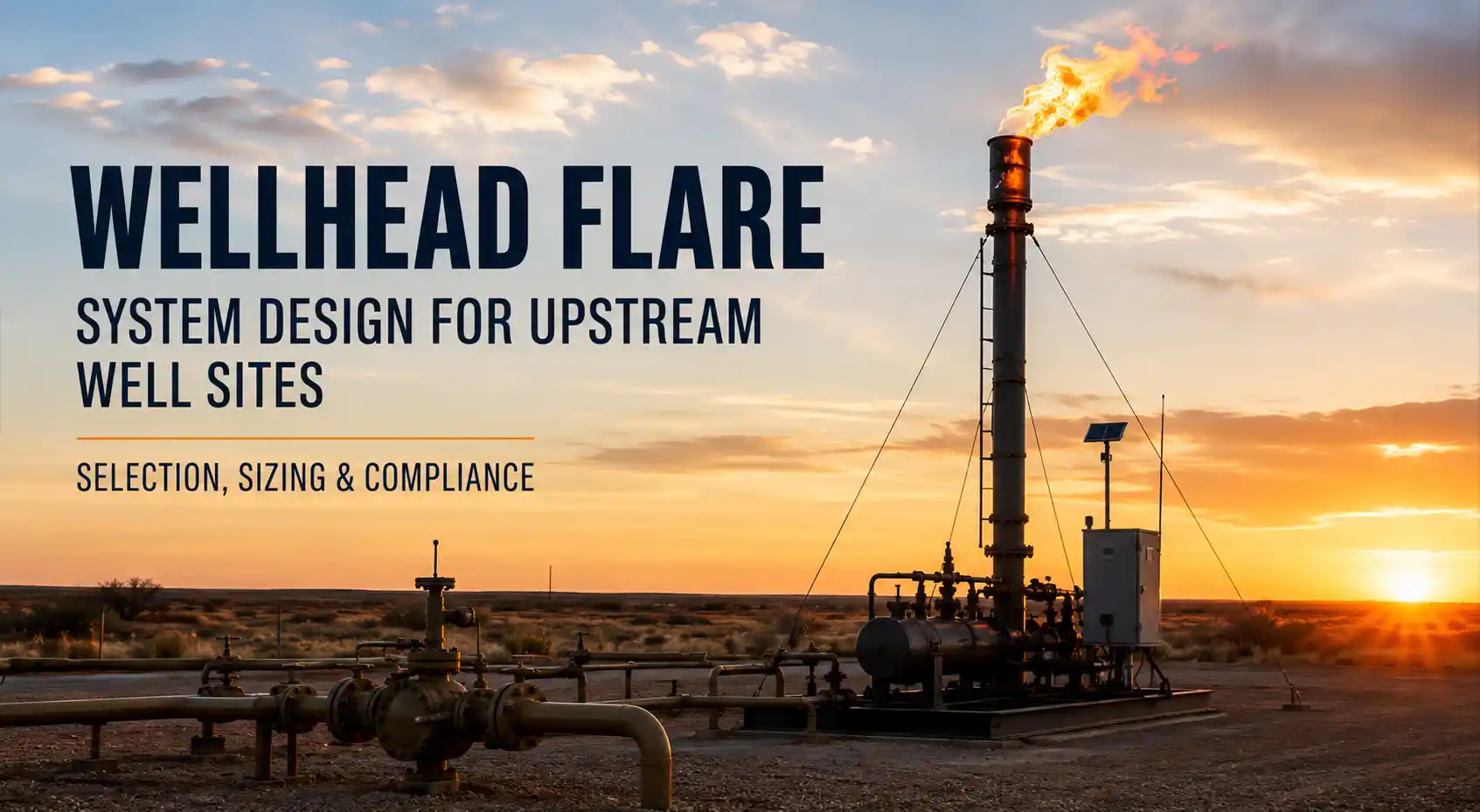
Wellhead Production Pads
Single-well and multi-well pad flares for produced gas combustion. Sized from early production test flow to final stabilized production. Permian Basin, Mid-Con, Appalachian Basin experience.
Gas Compression Stations
Blowdown flares and continuous-duty combustion systems for midstream compression facilities. Handles compressor seal gas, pipeline blowdowns, and dehydration unit vent gas.
Gas/Oil/Water Separation Plants
Enclosed or elevated flares for separator vent and relief gas handling at larger gathering and separation facilities. High-flow enclosed designs for facilities near communities.
Pipeline Receipt and Delivery Terminals
Pressure relief and blowdown combustion for pipeline interconnects and metering stations. Designed to API RP 521 with radiation setback calculations for terminal personnel.
BTEX Control on Glycol Dehydrators
Enclosed combustors and vapor recovery units for glycol dehydrator still column vent streams. BTEX destruction per 40 CFR 63 Subpart HH (NESHAP for Oil and Gas) requirements.
HPS Combustion Expertise Across Industries
The same engineering serves gas processing, petrochemical & industrial, and mining markets.
Browse Data Sheets →Discuss Your ProjectQuestions We Get From O&G Engineers
Detailed answers to the technical and commercial questions that matter when specifying combustion equipment for oil & gas applications.
What DRE does your air-assist flare achieve in OOOOb service?
Our air-assist elevated flares achieve a minimum of 98% VOC destruction removal efficiency when the tip is sized to maintain heat content at or above 300 BTU/scf per 40 CFR 60.18(c). This exceeds the 95% threshold required under OOOOb. We provide a DRE basis document with each system citing the applicable CFR sections and our combustion efficiency methodology.
How do your flares handle variable flow at wellhead pads?
Our air-assist tip designs include stabilization tabs and pilot flame geometries that maintain stable combustion from minimum purge flow (typically 0.1 to 0.5 MMscfd) up to the design maximum without pilot blowout. For turndown requirements greater than 50:1, we recommend sonic tip designs or staged multi-tip configurations.
Can you design a flare for sour gas with high H2S content?
Yes.
Do your systems work at remote sites with no utility connections?
Yes. Our standard air-assist systems use gas-engine-driven air movers (no grid power required) or 24VDC solar-backed panels for pilot ignition and flame monitoring. We routinely install at remote Permian Basin and Oklahoma wellpads with no utility infrastructure.
What is your lead time compared to Zeeco or John Zink?
Standard air-assist and sonic flare systems ship in 2 to 6 weeks from order. Custom enclosed flares and thermal oxidizers typically run 6 to 12 weeks. Large combustion equipment manufacturers typically quote 16 to 24 weeks for custom systems. Our standard product lines cover the most common wellsite gas flow cases for operators with tight schedule commitments.
What documentation do you provide for EPA compliance reporting?
Every system ships with: (1) DRE basis document citing 40 CFR 60.18 or applicable subpart, (2) net heating value calculation for the design gas composition, (3) pilot flame specification including gas pressure and BTU content, (4) exit velocity at design flow, and (5) equipment specification sheet referencing applicable API standards. This package is designed to attach directly to your air permit compliance records.
How is radiation heat flux calculated for elevated flares?
We use the API RP 521 point source radiation model. Inputs are the flare stack height, design heat release rate (BTU/hr), atmospheric transmissivity, and wind tilt factor.
When should I use a sonic (Coanda) tip instead of air-assist?
A Coanda-effect tip uses the high exit velocity of pressurized waste gas to aspirate combustion air.
Can you supply a vapor recovery unit that integrates with our existing flare?
Yes. Our VRU systems are standalone skid-mounted packages that connect upstream of an existing flare. The VRU runs as the primary gas handling device and the flare handles startup, upset, and overflow conditions. We can size the VRU to handle 80 to 95% of normal production flow while right-sizing the flare for the remaining upset capacity.
Does the enclosed flare produce any visible flame or light emissions at night?
No.
Do you offer field installation and commissioning services?
Yes. HPS offers optional site supervision for installation and commissioning. Our field engineers verify structural installation, piping connections, pilot gas supply pressure, ignition system function, and flame detector operation before sign-off. We also offer startup documentation and operator training. Contact us when ordering if you need commissioning support.
What makes HPS different from buying through an equipment distributor?
Distributors typically resell standard catalog items without engineering review. HPS sizes every system to your specific gas data: composition, flow rates, pressure, and site elevation.
We work almost exclusively with upstream and midstream oil & gas operators in Oklahoma, Texas, and surrounding basins. We understand what a wellhead flare actually has to do: start reliably at 3 AM, handle a production test blowdown, and pass an OOOOb inspection the following week.
↓ Download PDFLatest Innovations in Flare Technology for OOOOb Compliance
How sonic tip design, low-NOx pilots, and remote monitoring are changing OOOOb compliance at upstream sites.
→ Read Article8 Things Engineers Must Evaluate When Specifying a Flare System
A practical checklist covering DRE, turndown, materials, pilot design, radiation, and compliance documentation.
→ Read GuideKey Safety Standards for Industrial Flare Systems
Overview of API RP 521, API Std 537, NFPA 85, and OSHA PSM requirements for flare system design and operation.
→ Read GuideBTEX Control on Glycol Dehydrators: Combustion vs. Recovery
When to specify an enclosed combustor and when a VRU makes better economic sense for dehydrator vent streams.
→ Read ArticleTalk to an HPS Engineer About Your Specific Application
No brochures. No sales pitch. Tell us your gas composition and flow rates and we will tell you what fits.
→ Get Engineering InputRelated Products & Markets
Ready to Specify Your Oil & Gas Flare System?
Send us your gas composition and flow rates. We will size the right system, confirm OOOOb compliance margin, and quote lead time, usually within 48 hours.
Hero Process Solutions — 14842 Maple Dr, Kellyville, OK 74039 — sales@hero-ps.com
Request Engineering & Pricing
Send us your application details and we will respond with equipment recommendations, compliance documentation basis, and a price indication within 48 hours.
Need datasheets first?
Download dimensional data and spec sheets for all HPS products.
View All Datasheets → Hero Process Solutions
Hero Process Solutions provides industry-leading emission control and vapor management equipment for the oil and gas industry, delivering reliable solutions that keep operations compliant and efficient.
© 2026 Hero Process Solutions. All rights reserved.