
Flare & Combustion Systems for Bio-Gas Operations
Landfill gas collection systems, anaerobic digesters, agricultural biogas operations, and RNG project bypass connections all require combustion control equipment engineered for low-BTU gas, siloxane and H2S tolerance, and NSPS permit documentation.
What Makes Bio-Gas Combustion Equipment Different
Biogas streams are chemically complex: siloxanes foul combustion surfaces, H2S drives alloy selection, and landfill gas BTU content varies with precipitation, cell age, and seasonal temperature swings.
Low and Variable BTU Landfill Gas
Municipal solid waste landfill gas typically runs 40% to 60% methane, with the balance CO2 and trace gases. BTU content fluctuates with precipitation infiltration into the waste mass, barometric pressure, seasonal temperature, and as cells are filled, capped, and aged — sometimes dropping below the 300 BTU/scf regulatory minimum for unaided combustion.
Siloxane Fouling of Combustion Surfaces
Digester gas from wastewater treatment plants and food waste digesters frequently contains volatile methyl siloxanes (D4, D5, D6, linear siloxanes). These compounds combust to form hard silicon dioxide deposits that accumulate on flare tips, burner nozzles, pilot assemblies, and refractory surfaces — reducing combustion efficiency and requiring cleaning or replacement of affected components.
H2S and Trace Contaminant Streams
H2S concentration in biogas varies widely — from under 100 ppm in some agricultural digesters to over 5,000 ppm in certain food waste or co-digestion streams. High H2S at combustion temperatures produces sulfur dioxide and creates acid condensate that corrodes standard carbon steel components. Alloy selection must match the H2S loading at the specific site.
Remote and Unattended Site Operation
Landfill gas header collection points, agricultural digester combustors, and RNG project bypass flares are frequently in locations with limited site staffing. Equipment must operate unattended for days to weeks between operator visits, with automatic restart, pilot monitoring, and remote alarm capability.
NSPS and Title V Permit Documentation
MSW landfill operators subject to NSPS Subpart XXX or Emission Guidelines Subpart Cf must document control device DRE, monitor operating parameters continuously (temperature for enclosed combustors, velocity or BTU for open flares), and submit annual compliance certifications. The control device specification must be included in the Title V permit application.
Get Your System Specified
Not sure which biogas combustion or flare system fits your application?
Tell us your gas composition, flow rate, and site requirements — we confirm the right equipment and lead time within 48 hours.
Request a Free Engineering Consultation →Combustion Systems for Bio-Gas Applications
Landfill gas enclosed combustors, digester gas flares, and rental units for temporary bio-gas control — all designed for the specific BTU content, contaminant profile, and permit requirements of renewable gas streams.

Enclosed Combustors for Bio-Gas
Refractory-lined enclosed combustors for landfill gas, anaerobic digester effluent, and RNG project bypass gas. Supplemental fuel injection and automatic temperature control maintain 98%+ NMOC DRE across the full range of LFG BTU content.

Air-Assist Flares for Bio-Gas
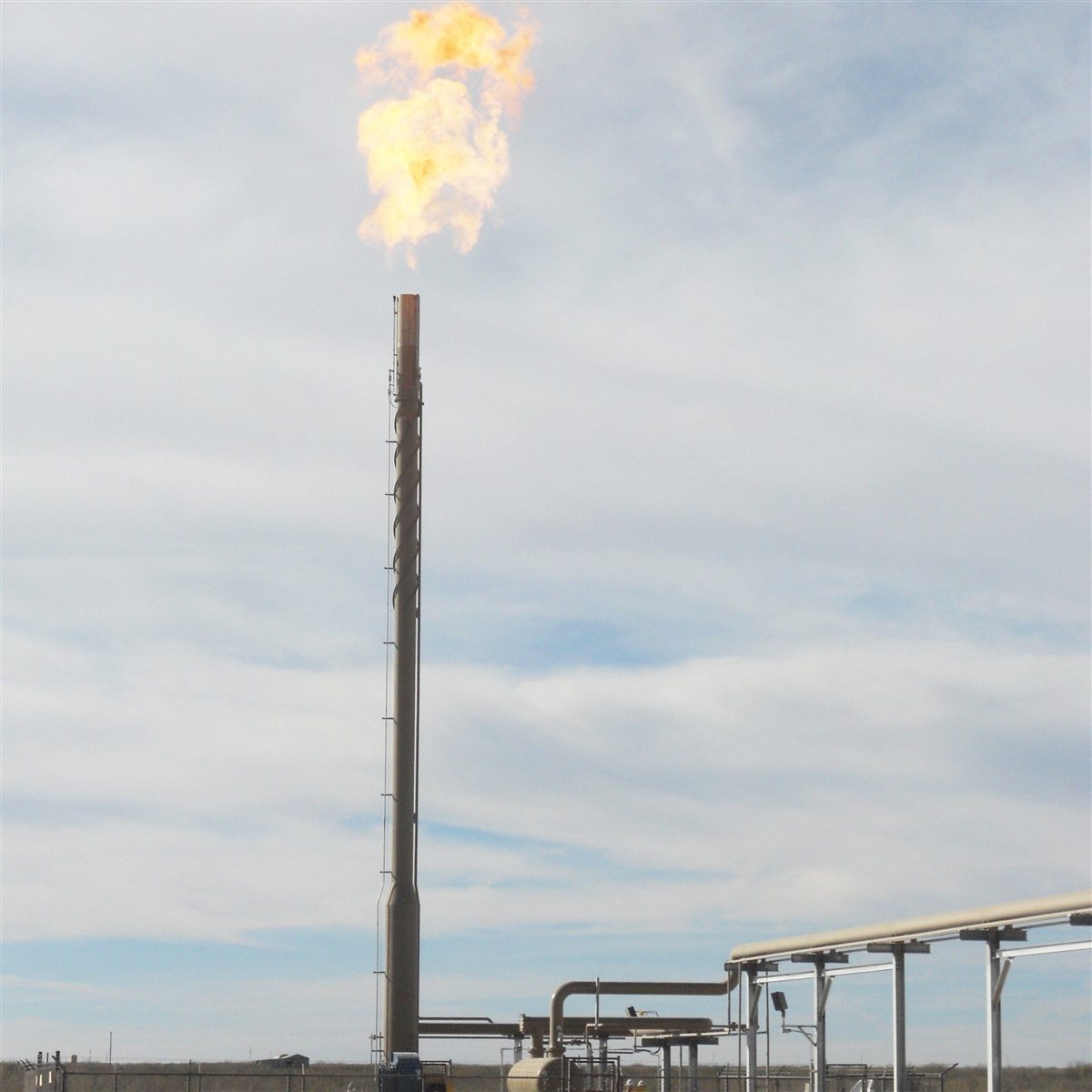
Elevated air-assist flare systems for higher-BTU landfill gas streams, RNG project excess gas bypass connections, and emergency pressure relief at biogas upgrading facilities. NSPS-compliant with continuous velocity or BTU monitoring.
Rental & Portable Flare Units
Trailer-mounted combustors and flares available for rental or purchase for temporary landfill gas control during new cell development, digester startup and commissioning, GCCS system expansion, and emergency bypass situations.
Bio-Gas Operations HPS Engineers For
Each bio-gas source type has a different gas composition, permit framework, and operational profile that drives equipment selection and monitoring requirements.
Municipal Solid Waste Landfills
GCCS-connected enclosed combustors for MSW landfills subject to NSPS Subpart XXX or Emission Guidelines Subpart Cf. 98% NMOC DRE with continuous combustion temperature monitoring and annual compliance reporting documentation.
Wastewater Treatment Digester Gas
Digester gas from municipal WWTP anaerobic digesters contains siloxanes and moderate H2S. Enclosed combustors with accessible internals for siloxane deposit maintenance and alloy components for H2S service. Backup combustion for CHP or gas upgrading bypass.
Agricultural & Food Waste Digesters
Farm-scale and food waste co-digestion systems with varying gas production rates and compositions. Smaller enclosed combustors and flares for operations that are too small for CHP but still require permitted gas destruction. H2S alloy specs matched to the feedstock.
RNG Project Bypass & Excess Gas
Renewable natural gas upgrading facilities require a permitted flare or enclosed combustor for bypass during membrane or PSA system maintenance, during commissioning, and as a continuous overflow for gas production exceeding pipeline injection capacity.
Composting Facility VOC Control
Covered composting facilities and in-vessel systems generate low-BTU VOC-laden air streams requiring combustion control under state air permits. Enclosed combustors with supplemental fuel handle the dilute, variable-flow streams from composting windrows and forced-aeration systems.
Industrial Anaerobic Digesters
Food and beverage processing, brewery, and industrial wastewater facilities using anaerobic digestion for biogas recovery require robust backup combustion when the CHP engine or boiler is offline, and startup flaring for initial digester commissioning.
Key Standards for Bio-Gas Combustion Equipment
| Standard / Rule | Applicability | Key Requirement | HPS Products | Status |
|---|---|---|---|---|
| 40 CFR Part 60, Subpart XXX NSPS for Municipal Solid Waste Landfills (new sources after 2016) |
MSW landfills with design capacity at or above 2.5 million Mg and 2.5 million m3 that have accepted waste since 11/8/1987, if the landfill has NMOC emissions at or above 34 Mg/yr. | Gas collection and control system (GCCS) must achieve 98% NMOC reduction or reduce NMOC outlet concentration to 20 ppmv. For enclosed combustors: continuous combustion temperature monitoring at or above 1,000°F. For open flares: continuous velocity and BTU monitoring per 40 CFR 60.18. | Enclosed Combustors, Air-Assist Flares | COMPLIANT |
| 40 CFR Part 60, Subpart Cf Emission Guidelines for Existing MSW Landfills |
Existing MSW landfills (accepted waste after 11/8/1987) with design capacity at or above 2.5 million Mg and NMOC emissions at or above 34 Mg/yr. Implemented through state plans (SIPs). | Same GCCS and control device performance requirements as Subpart XXX — 98% NMOC reduction or 20 ppmv outlet. State plans may add additional monitoring, recordkeeping, or reporting requirements beyond the federal standard. | Enclosed Combustors, Air-Assist Flares | COMPLIANT |
| 40 CFR Part 60, Subpart WWW Original NSPS for MSW Landfills (sources before 2016) |
MSW landfills that commenced construction, modification, or reconstruction after May 30, 1991 and on or before July 17, 2014, and meet the applicable capacity and emission thresholds. | GCCS required when NMOC exceeds 50 Mg/yr threshold. Control device must achieve 98% NMOC reduction. Enclosed combustor temperature monitoring at or above 1,200°F (higher set point than Subpart XXX). Open flare compliance per 40 CFR 60.18. | Enclosed Combustors, Air-Assist Flares | COMPLIANT |
| 40 CFR 60.18(c) General Combustion Device Performance Standards |
All flares used to comply with any NSPS or NESHAP standard, including landfill gas flares and digester gas flares cited in permit conditions as the control technology. | Net heating value at or above 300 BTU/scf at the flare tip; continuous pilot with automatic restart; no visible emissions except in specified circumstances; velocity at tip not to exceed 60 ft/s for rich gas or 400 ft/s for lean gas. | All HPS flare products | COMPLIANT |
| State Air Quality Permits Title V Major Source Permits / Minor Source Operating Permits |
Digester gas combustors at wastewater treatment plants, food waste facilities, and agricultural operations that are major or minor sources under the applicable state program. Requirements vary by state. | Control device specifications, DRE documentation, and monitoring plan submitted with permit application. State programs may require stack testing, continuous temperature monitoring, or annual compliance certifications above and beyond federal requirements. | All products | SITE-SPECIFIC |
Technical Questions on Bio-Gas Flare and Combustion Systems
What destruction efficiency is required for a landfill gas control device under EPA rules?
Do siloxanes damage enclosed combustor internals, and how do you design for them?
How do you specify the alloy for high-H2S biogas service?
Can you supply a combustor for a small farm-scale agricultural digester?
What continuous monitoring is required for a landfill gas enclosed combustor?
Do you offer rental units for temporary landfill gas control during GCCS expansion?
Landfill gas is not a stable industrial fuel — it’s a moving target. The same landfill that produces 500 BTU gas today will be producing 300 BTU gas from older cells five years from now. The combustor has to handle both ends, or the operator is out of compliance on the bad days.
Craig Rosencutter, President, Hero Process SolutionsRNG Project Support
Building or expanding an RNG upgrading facility? HPS designs permitted bypass flares and enclosed combustors for excess gas and maintenance bypass connections, sized for your pipeline injection capacity and membrane or PSA system bypass flow.
Technical Reference for Bio-Gas Applications
Combustor & Flare Spec Sheets
Dimensional and performance data for HPS enclosed combustors, air-assist flares, and rental units for landfill gas and digester service.
↓ View All DatasheetsEnclosed Combustors for Bio-Gas
98%+ NMOC DRE enclosed combustors for landfill gas, digester gas, and RNG bypass. NSPS Subpart XXX / Cf / WWW compliant with PE-stamped permit documentation.
→ View ProductAir-Assist Flares
Elevated air-assist flares for higher-BTU landfill gas and RNG project bypass. NSPS-compliant with continuous velocity and BTU monitoring per 40 CFR 60.18.
→ View ProductsRental & Portable Flare Units
Trailer-mounted combustors and flares for rental during GCCS expansion, digester commissioning, and enclosed combustor downtime for maintenance.
→ View ProductCombustors & Thermal Oxidizers
Small enclosed combustors for agricultural digesters and composting VOC control. Propane pilot, simple controls, minor source permit documentation included.
→ View ProductsTalk to an HPS Engineer
Send us your gas flow rate, BTU content, H2S concentration, siloxane data, and permit status. We confirm equipment type and DRE compliance basis within 48 hours.
→ Contact UsBio-Gas Combustion Equipment Quote
Send us your gas flow rate (scfm), BTU content, H2S level, siloxane data if available, applicable permit rule (NSPS Subpart XXX / WWW / Cf or state permit), and whether you need purchase or rental. We respond within 48 hours.
- ✓ 98%+ NMOC DRE — NSPS Subpart XXX / Cf / WWW compliant
- ✓ Siloxane-tolerant designs with accessible internals
- ✓ H2S alloy options matched to your gas composition
- ✓ Rental fleet available for temporary landfill gas control
Need datasheets first?
↓ View All HPS Datasheets →Ready to Specify Your Bio-Gas Combustion System?
Send us your gas flow, BTU content, H2S level, and permit rule. We confirm equipment type and DRE compliance basis within 48 hours.
Hero Process Solutions, 14842 Maple Dr, Kellyville, OK 74039