
Flare Systems & Combustion Equipment for the Haynesville Shale
Hero Process Solutions designs, manufactures and services high-pressure flare systems, enclosed combustors, and emissions equipment for Haynesville Shale operators across northwest Louisiana and the East Texas extension. Engineered for the deep, dry, high-pressure gas that feeds Gulf Coast LNG export, with the field support to handle completions, tie-ins, and turnarounds when timing matters.
100+ years combined combustion engineering
Most enclosed combustors on the EPA-approved list
Engineered for high-pressure dry-gas service
Hero Process Solutions provides high-pressure flare systems, sonic and air-assist flares, emergency utility flares, enclosed combustors and supporting equipment for Haynesville Shale operators across northwest Louisiana (DeSoto, Bienville and Sabine parishes) and the East Texas extension. Our equipment is engineered for the deep, high-pressure, dry gas that feeds Gulf Coast LNG export, with EPA-compliant designs that help operators meet Louisiana Office of Conservation, Texas Railroad Commission and federal OOOOb/OOOOc requirements.
The Haynesville Shale: deep, high-pressure dry gas feeding the LNG era
The Haynesville Shale is a deep, high-pressure, high-temperature natural gas play straddling northwest Louisiana and East Texas. Wells produce dry, methane-rich gas from reservoirs typically in the range of 10,500 to 13,500 feet, with wellhead pressures and bottomhole temperatures that put real demands on completion equipment and surface combustion alike. After a few quieter years, the play is back into a sustained growth cycle, driven primarily by Gulf Coast LNG export demand.
Two geographies matter for equipment selection. The Louisiana core runs through DeSoto, Bienville, Sabine, Caddo, Red River and Webster parishes, where operators including Expand Energy, Comstock Resources and Apex Natural Gas anchor most current activity. The play extends west into East Texas as the Bossier and western Haynesville, across Harrison, Panola, Shelby, Nacogdoches and San Augustine counties, where Comstock and others continue to drill into the same reservoirs from the Texas side of the border.
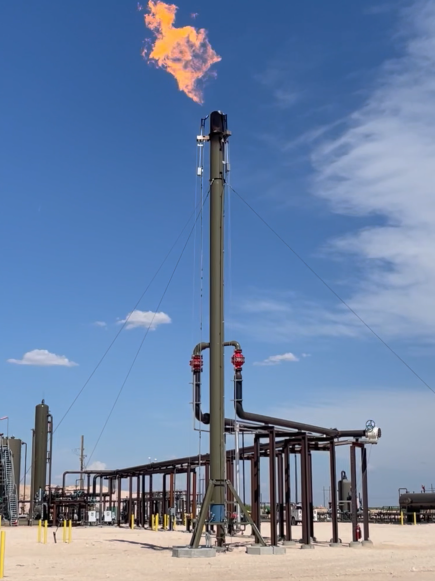
The LNG context is the operational story. With Gulf Coast LNG export capacity continuing to expand through the end of the decade, the Haynesville is one of two basins (the Permian is the other) supplying the marginal molecule. That translates into a steady cadence of new completions, midstream tie-ins, and short-window flaring during pad start-ups and processing turnarounds, all at pressures and flow rates that demand properly engineered combustion equipment.
| Attribute | Haynesville detail |
|---|---|
| Gas profile | Deep, high-pressure, high-temperature dry gas (methane-rich, minimal liquids); reservoirs typically 10,500 to 13,500 ft |
| Louisiana core | DeSoto, Bienville, Sabine, Caddo, Red River and Webster parishes |
| East Texas extension | Harrison, Panola, Shelby, Nacogdoches and San Augustine counties (Bossier / western Haynesville) |
| Market driver | Gulf Coast LNG export buildout; Haynesville and Permian together supply most incremental U.S. gas growth |
| Louisiana regulator | Louisiana Office of Conservation (within the Louisiana Department of Energy and Natural Resources) |
| Texas regulators | Railroad Commission of Texas (RRC), Statewide Rule 32 flaring/venting; TCEQ air permitting |
| Federal overlay | EPA 40 CFR 60 Subpart OOOOb / OOOOc, methane and VOC standards |
| Primary HPS solutions | Sonic flares, air-assist flares, emergency utility flares, enclosed combustors, separators and knockouts, rentals, field services |
Haynesville flaring & emissions challenges
High-pressure, high-flow gas at completions and tie-ins
Haynesville completions and midstream tie-ins put high-pressure, high-flow gas to surface in short, intense windows. Sonic flare tips are engineered for exactly this duty cycle, burning high-pressure gas efficiently and smokelessly. Air-assist flares cover variable-pressure service.
Emergency and utility flaring during processing upsets
Processing plants, midstream gathering systems and compressor stations all need reliable relief during upsets, blowdowns and turnarounds. Emergency utility flares provide that destruction capability without becoming a routine emissions source.
Pad and infrastructure proximity
As pad density rises with the LNG-driven growth cycle, pads sit closer to roads, neighbors, and other operating infrastructure. Smokeless combustion, controlled radiant heat, and reduced flame visibility all become operational priorities. Enclosed combustors conceal the flame; sonic and air-assist designs minimize smoke.
Liquids and condensate handling on the wetter edges
Although the Haynesville is fundamentally dry gas, completion fluids, water and small amounts of condensate still need to be removed upstream of any combustion. Hero’s 3-phase separators and liquid knockouts protect downstream flares and combustors during high-rate early flowback.
LNG feedgas quality and reliability expectations
Gas heading to Gulf Coast LNG terminals carries downstream contractual and quality obligations. Surface equipment failures upstream cost more than they used to. Operators are leaning into equipment that is built to spec, properly engineered for actual gas conditions, and supported by a responsive vendor.
Haynesville emissions compliance & how Hero helps
General guidance, not legal advice. Rules differ between Louisiana and Texas and continue to evolve. Confirm current requirements with your regulator. Hero’s role is to supply equipment that helps you meet whichever standard applies.
Louisiana’s Office of Conservation regulates oil and gas drilling, production, and the conservation of resources statewide. Flaring and venting are subject to authorization with an emphasis on preventing waste. Hero supplies EPA-listed enclosed combustors, sonic and air-assist flares and emergency utility flares that give DeSoto, Bienville, Sabine and adjacent parish operators a defensible path.
On the East Texas side, flaring and venting are governed by the Railroad Commission’s Statewide Rule 32 and related permitting, with air authorizations from the TCEQ. Hero’s flares and combustors are sized and built for compliant operation in Harrison, Panola, Shelby, Nacogdoches and San Augustine county sites, with field services to keep them running.
Federal New Source Performance Standards under 40 CFR 60 Subpart OOOOb and OOOOc set methane and VOC requirements for new, modified and existing oil and gas sources. The direction is toward capture or high-efficiency destruction. Hero’s equipment lineup and compliance resources support that path on both sides of the Haynesville footprint.
Flare & combustion solutions for the Haynesville
Sonic Flares
Engineered for high-pressure gas, the headline service in the Haynesville. Efficient, smokeless combustion of the high-pressure flow typical at completions, tie-ins and processing relief.
Air-Assist Flares
Smokeless combustion across variable-pressure conditions; good fit where pressure and composition swing during early flowback.
Emergency Utility Flares
Reliable relief during completions, midstream tie-ins, processing upsets and turnarounds. A core piece of any Haynesville surface package.
Enclosed Vapor Combustors
High-efficiency, smokeless destruction with a concealed flame for pad-side service near sensitive receptors and infrastructure.
Thermal Oxidizers
High destruction efficiency where the strictest VOC limits apply, typically at processing facilities and selected midstream sites.
3-Phase Separators & Liquid Knockouts
Remove completion fluids, water and trace condensate upstream of combustion. Protect flare tips and combustors during high-rate flowback.
Vapor Recovery Units
Capture tank-battery vapors where condensate handling is needed; secondary in the Haynesville compared to oil basins, but still part of the toolkit.
BTEX Condenser Systems
Control BTEX and VOC at glycol dehydration still vents in gas processing and midstream service.
Rentals
Bridge temporary or emergency needs during completions, turnarounds, and capacity gaps. Standard units ship from stock.
Field Services & Aftermarket
Install, commission, inspect and maintain equipment across the Louisiana core and East Texas extension.
Haynesville field service, rentals & rapid response
Hero Process Solutions supports Haynesville operators across DeSoto, Bienville, Sabine, Caddo, Red River and Webster parishes in Louisiana and the East Texas extension across Harrison, Panola, Shelby, Nacogdoches and San Augustine counties.
Equipment is engineered and fabricated at our headquarters in Kellyville, Oklahoma and shipped into the region, with our Midland, Texas field base providing additional logistics depth on the East Texas side.
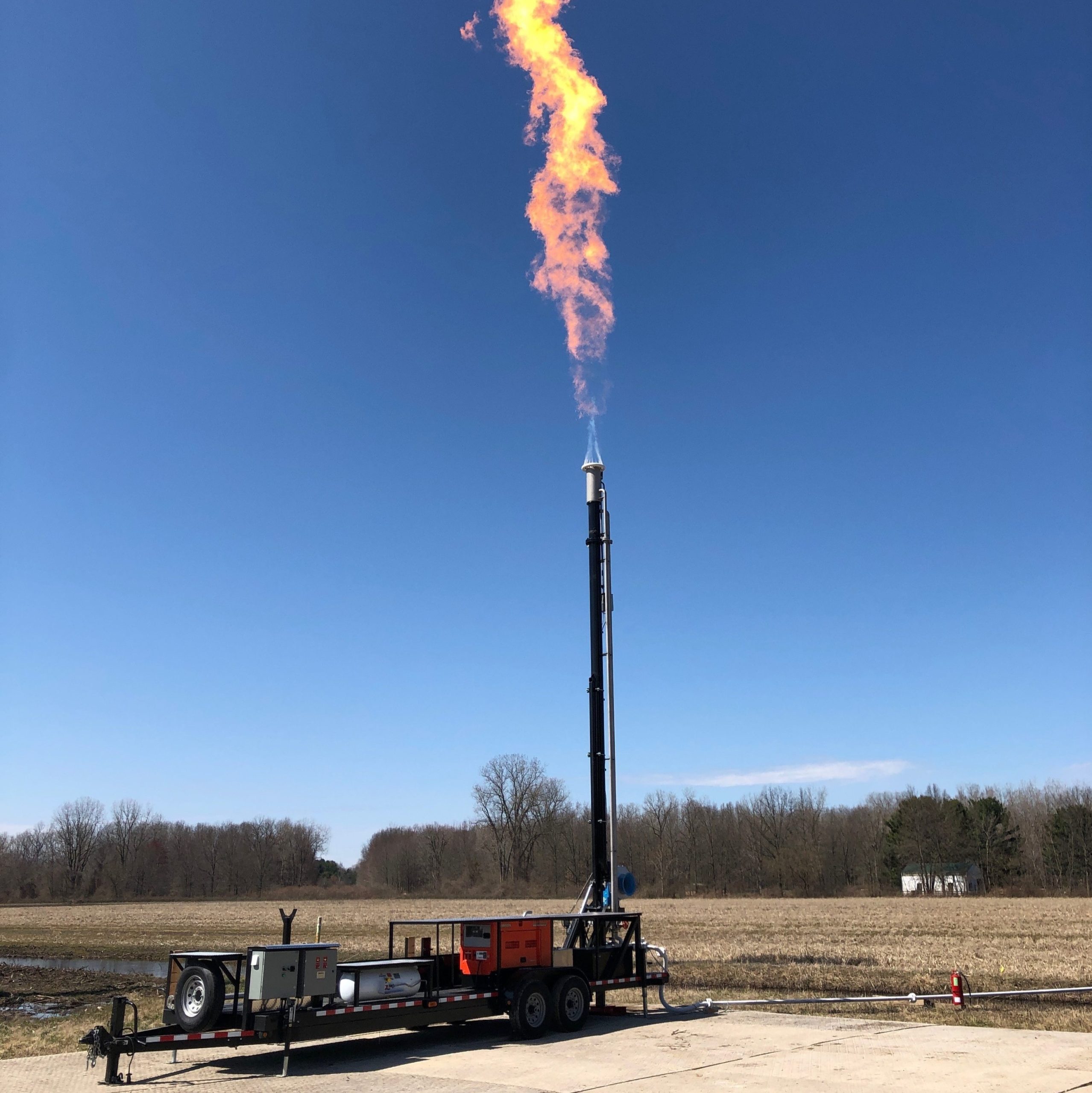
Field scopes include installation, commissioning, inspection, troubleshooting and emergency support. When timelines are tight, our rental fleet of flares and combustion equipment lets operators put compliant equipment on site quickly, especially during completions or midstream tie-in windows where waiting is not an option.
Why Haynesville operators choose Hero Process Solutions
Engineered for high-pressure dry gas
Sonic and air-assist flare designs sized for the actual Haynesville pressure and flow profile, not nameplate averages. Equipment built for the deep, high-temperature conditions that define this play.
Engineering depth
A combustion-engineering team with 15 to 30 years of individual experience and 100+ years combined, designing systems for your exact gas composition and conditions.
Proven compliance record
More enclosed combustors on the EPA-approved list than any other vendor, useful in front of Louisiana Office of Conservation and TCEQ reviewers.
Two-state field support
Louisiana parishes and East Texas counties, with logistics anchored by our Kellyville HQ and Midland field base. Standard systems in stock plus fully custom builds engineered for your service.
Flare & combustion in the Haynesville
- The Haynesville is a deep, high-pressure, dry-gas play split between northwest Louisiana and East Texas, with growth driven by Gulf Coast LNG export demand.
- Sonic and air-assist flares plus emergency utility flares are the headline equipment for completions, midstream tie-ins, and processing relief.
- Louisiana operators answer to the Office of Conservation (DENR); Texas operators to the Railroad Commission and TCEQ; both states are overlaid by EPA OOOOb/OOOOc.
- Hero engineers high-pressure, high-flow combustion systems specifically for Haynesville conditions, with separators and knockouts upstream when fluids are present.
- Two-state field support from Kellyville (HQ) and Midland (East Texas logistics) keeps equipment delivery and service tight against tight project windows.
Haynesville Shale flare & combustion FAQs
What flare equipment is best for Haynesville’s high-pressure dry gas?
Does Hero serve both the Louisiana and East Texas sides of the Haynesville?
How does the Gulf Coast LNG buildout affect Haynesville equipment demand?
Can Hero provide flare equipment for new Haynesville well completions?
What are the main regulators for Haynesville flaring and emissions?
Does Hero offer rental flares for Haynesville completions and tie-ins?
How does dry gas in the Haynesville change equipment selection compared to oil basins?
Does Hero help with EPA OOOOb compliance in the Haynesville?
Request a Quote for Haynesville Flare & Combustion Equipment
Tell us your gas composition, pressure, flow, and the site type (well completion, midstream tie-in, processing facility), and our combustion engineers will recommend the right sonic, air-assist, utility or enclosed combustion solution for your Haynesville site in Louisiana or East Texas. Standard systems ship from stock; custom builds are engineered to your specs.