

What Is a Vapor Recovery Unit and How Does It Work?
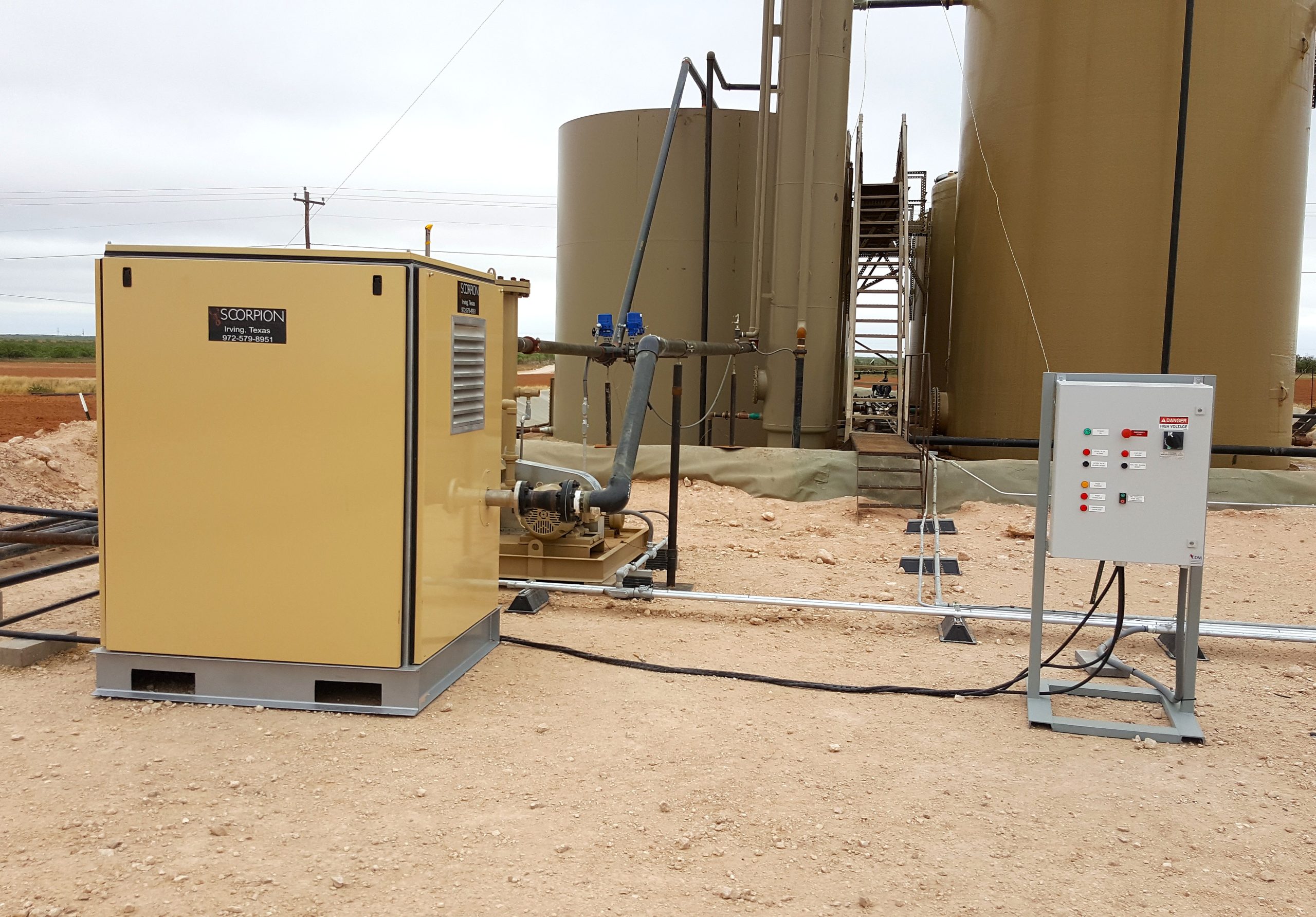
A vapor recovery unit is a compression package built to capture the low-pressure hydrocarbon vapors that collect in crude oil, condensate, and produced water storage tanks, and to route them somewhere useful instead of to the atmosphere. As liquid flows into a tank, light hydrocarbons flash off and the tank pressure rises.
The VRU draws those vapors off through a scrubber that removes any liquids, then a compressor boosts them to a usable pressure and sends them to the sales pipeline, to fuel gas, or back into the process. A variable frequency drive and automated controls keep the system matched to the vapor flow, so it holds steady tank pressure and avoids pulling air into the system.
The result is captured product and far lower emissions. Send us your tank setup and we will confirm the VRU design.
VRU and the Vapor Recovery Tower (VRT): How They Work Together
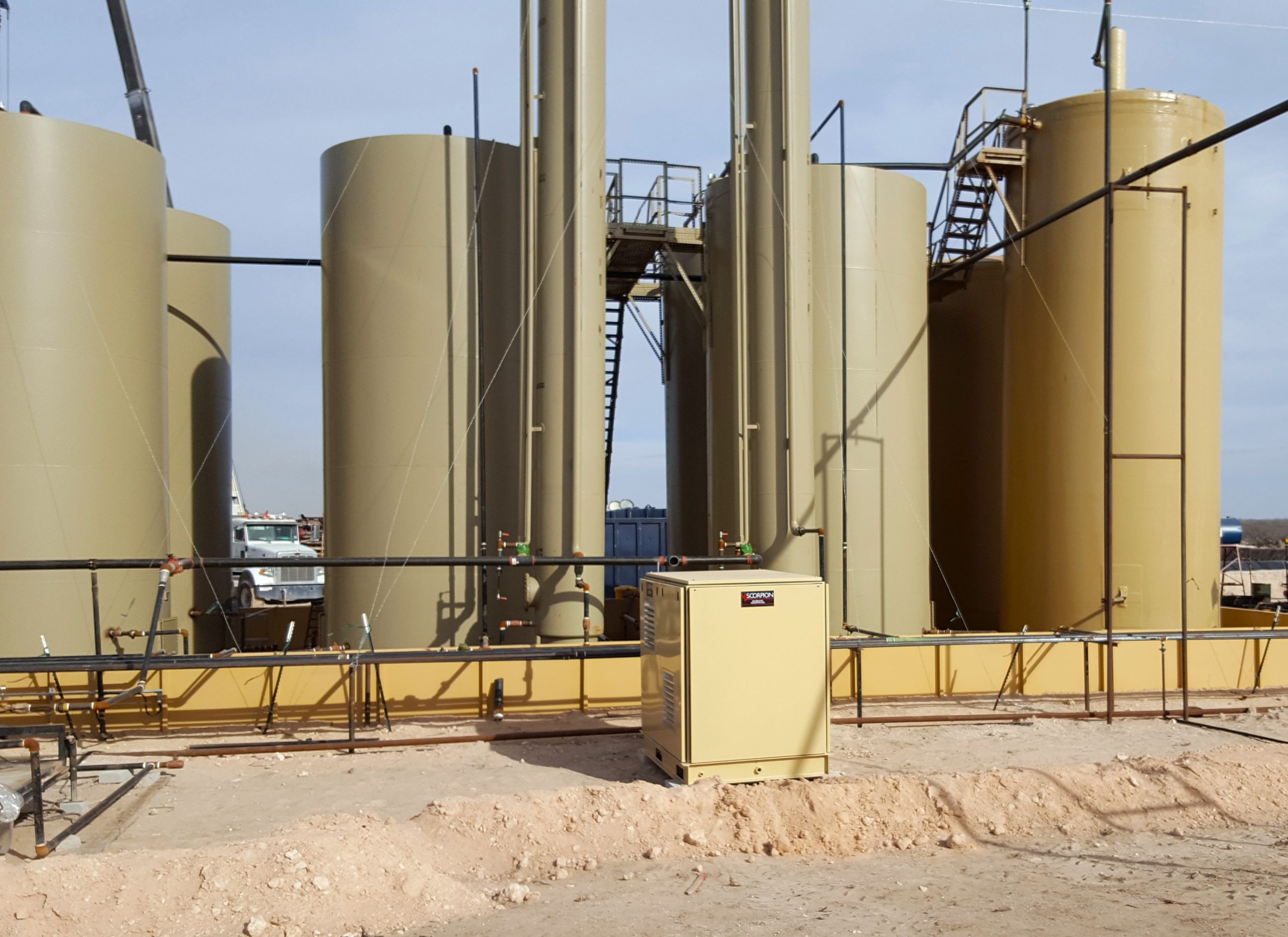
On many sites a VRU is paired with a vapor recovery tower (VRT). A VRT is a tall vertical vessel installed between the production separator and the storage tanks. It captures the flash gas that comes out of the oil at near-atmospheric pressure and holds it at a slightly elevated pressure, usually around 1 to 5 psig, before feeding it to the VRU.
That does two things: it keeps oxygen out of the system and it cuts the volume of flash gas that reaches the tanks, which can lower tank emissions enough to ease your compliance burden. The VRU then compresses the recovered gas and sends it to sales.
We can design your VRU to work with a vapor recovery tower so the whole system recovers more gas and stays compliant.
Advanced Vapor Recovery Technology
Our vapor recovery packages combine proven engineering with operator-friendly design to deliver effective, cost-efficient alternatives to venting, flaring, or combustion-based emission control methods. Built for durability and performance, they help facilities minimize emissions and maximize hydrocarbon reuse while maintaining reliable operation in varied field conditions.
Features & Capabilities:
Venting or Flaring Tank Vapors You Could Be Selling?
A Hero VRU captures those vapors and turns them into recovered gas while cutting emissions. Send your tank count, vapor volume, and pressure and we will size the right unit and estimate the payback.
WHY CHOOSE OUR VAPOR RECOVERY SYSTEMS
The ROI of Vapor Recovery
A VRU is one of the few emission controls that pays you back. Instead of burning or venting tank vapors, you capture them and sell them or use them as fuel, so the gas that used to be a cost becomes recovered revenue.
Across the industry, even a modest tank battery can lose a meaningful amount of sellable gas to venting and flaring each year, and recovering it can offset the cost of the unit over time. Add in the avoided risk of non-compliant venting, the lower maintenance of a durable system, and the value of staying off a flare, and the payback case is straightforward.
Send us your vapor volumes and we will help you estimate the recovery and payback for your site.
Compliance: EPA OOOO and Zero Routine Flaring
Capturing tank vapors is increasingly a requirement, not an option. EPA New Source Performance Standards (NSPS OOOO, OOOOa, and OOOOb) push operators toward controlling storage-tank and process emissions, and a common benchmark is reducing tank VOC emissions by 95% or more.
A VRU meets that by capturing the vapors and routing them to sales or fuel instead of the atmosphere, which also supports zero-routine-flaring goals. Where vapor volumes fit the system capacity, a VRU can do this without a flare or combustor at all.
We can help tie VRU performance to your specific permit. For more on the new-source rules, see our OOOOb/c overview.
Applications and Industries Served
Vapor recovery units fit anywhere low-pressure hydrocarbon vapors would otherwise be lost. Common sources include crude oil and condensate storage tanks, production separators, and produced water tanks, and common sites include well-site tank batteries, gathering and booster stations, and gas processing plants.
Operators across the Permian Basin, Oklahoma, Marcellus, and Haynesville plays use VRUs to cut emissions and recover gas. Tell us your tank count, vapor volume, and pressure and we will confirm the fit.
Frequently Asked Questions
A vapor recovery unit is a compression package that captures low-pressure hydrocarbon vapors from storage tanks, separators, and produced water tanks and routes them to the sales line, fuel, or back into the process instead of venting or flaring them. It cuts emissions and recovers sellable gas. Send us your tank data and we will size one.
You likely need a VRU if your tanks, separators, or produced water systems generate vapors currently being vented or flared. A VRU captures and reinjects them, helping you meet EPA and state standards while recovering product. Hero designs closed-loop VRUs for sites across Oklahoma, Texas, and beyond. Contact us to discuss your site.
Vapors are drawn from the tank through a scrubber that removes liquids, then a compressor boosts them to a usable pressure and sends them to sales, fuel, or reinjection. A variable frequency drive and automated controls match the system to vapor flow and hold steady tank pressure. The result is captured product and lower emissions.
A VRT is a vertical vessel between the separator and the tanks that captures flash gas at low pressure, around 1 to 5 psig, and feeds it to the VRU while keeping oxygen out and reducing tank emissions. The VRU then compresses that recovered gas and sends it to sales. They are often used together, and we can design a VRU to pair with a VRT.
Hero VRUs are engineered for multi-source capture, so one system can recover vapors from separator gas, production tanks, and produced water tanks at once. Dynamic volume handling adjusts in real time to changes in vapor production. Most standard production facilities can consolidate recovery into one integrated package rather than running several standalone units.
VRUs support EPA NSPS OOOO, OOOOa, and OOOOb, which push operators to control tank and process emissions, often by 95% or more. By capturing vapors instead of venting or flaring them, a VRU gives you a documented compliance path and supports zero-routine-flaring goals. We can match VRU performance to your permit.
In many cases, yes. A VRU captures and reinjects vapors instead of destroying them, so where vapor volumes fall within system capacity it can eliminate the flare or combustor entirely. The result is zero routine flaring, recovered sellable product, and lower operating cost. We can evaluate your site to confirm whether a VRU alone meets your goals.
Timelines depend on system size, site configuration, and whether custom engineering is needed. Standard VRU packages are built for straightforward field deployment with minimal onsite assembly. Our engineers in Kellyville, OK and Midland, TX support sizing, planning, and commissioning so your system is operational quickly. Contact us for a project timeline.
Related Systems and Resources
A VRU often works alongside other vapor-control and process equipment. Explore related Hero systems below, or browse all products.
Contact us
We have engineers on standby to assist with any questions or to support you with any upcoming projects. Contact us today!