
QUICK ANSWER
A BTEX condenser system captures and condenses the VOC-laden still-vent stream from a glycol dehydrator still column — converting vented benzene, toluene, ethylbenzene, and xylene into recoverable liquid hydrocarbon and a clean non-condensable gas that is routed to combustion or compression rather than released. The outcome is documented compliance with EPA NESHAP (40 CFR 63 Subparts HH and HHH), NSPS OOOOb, and state VOC capture requirements, plus recovered product value instead of lost emissions.
What Is BTEX and Where Does It Come From?
BTEX stands for benzene, toluene, ethylbenzene, and xylene, four volatile organic compounds that occur naturally in oil and gas. Benzene in particular is a known carcinogen, which is why federal and state rules limit how much a site can release.
In gas processing, BTEX comes from the glycol dehydration unit. The dehydrator uses glycol, usually TEG, to absorb water from the gas in the contactor tower, and that rich glycol is then heated in a reboiler to drive the water back off. Along with the water, the reboiler flashes off the absorbed BTEX and other VOCs, which traditionally vented straight from the still column to the atmosphere.
That still-vent stream is exactly what a BTEX control system is built to capture. Send us your dehydrator details and we will confirm the right approach.
What Is a BTEX Condenser Unit and How Does It Work?
A BTEX condenser unit, also called a BTEX eliminator, captures the hot vapor coming off the dehydrator still column and cools it so the water and heavier hydrocarbons condense into liquid. The condensed liquid drops into a small separator where water and recovered hydrocarbons are collected and routed to storage, and the remaining non-condensable gas is sent on for combustion or recovery rather than released.
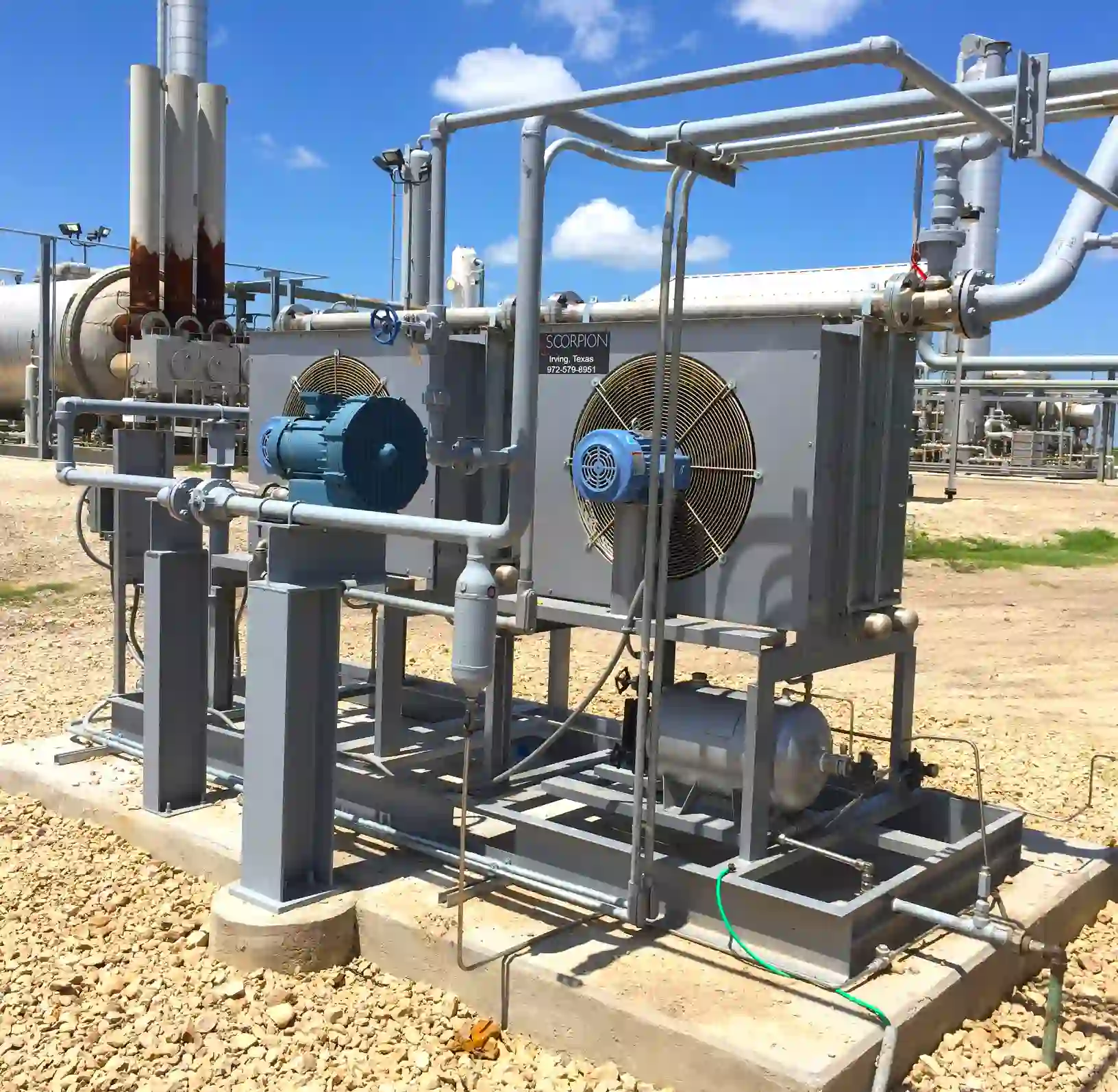
Hero uses a high-efficiency forced-draft design with an advanced heat exchanger that removes water carryover early, which prevents fouling and improves heat transfer so the unit performs even on warm days without auxiliary heating.
The result is a clean, compliant still-vent stream and recovered product instead of lost emissions. Tell us your flow and temperature and we will size the condenser.
Condenser Types and Configurations
BTEX still-vent vapors can be condensed several ways, and the right one depends on your climate and stream. Air-cooled designs use ambient air, either natural-draft with A-frame cooling fins, or forced-draft with a fan for more cooling on warm days. Glycol-cooled designs use a shell-and-tube exchanger and suit cold climates.
Hero forced-draft systems deliver more cooling than a standard condenser configuration, and they can be configured for a wide range of gas flows and pressures, with optional reinjection boosters for higher-pressure applications.
We will recommend the configuration that fits your site conditions.
| Condenser Type | Cooling Method | Best Climate | Hero Configuration |
|---|---|---|---|
| Air-cooled natural-draft | Ambient air through A-frame cooling fins | Mild / cool climates | Standard configuration |
| Air-cooled forced-draft (Scorpion) | Fan-assisted air with advanced heat exchanger — removes water carryover early | Hot climates, year-round performance | Hero Scorpion series — standard offering |
| Glycol-cooled | Shell-and-tube heat exchanger | Cold / arctic climates | Available on request |
HIGH-EFFICIENCY FORCED-DRAFT EMISSION SYSTEMS
Our forced-draft compressor packages condition and prepare the emission gas stream for either combustion or compression. The system’s advanced heat exchanger removes water carryover early in the process, preventing fouling and optimizing thermal transfer. As the gas moves through the system, additional air cooling reduces residual moisture, typically enabling operations on warm days without auxiliary heating. Operators can choose enhanced compressor options for increased performance and adaptability to site requirements.
Key Benefits:
Complete Closed-Vent Compression Packages
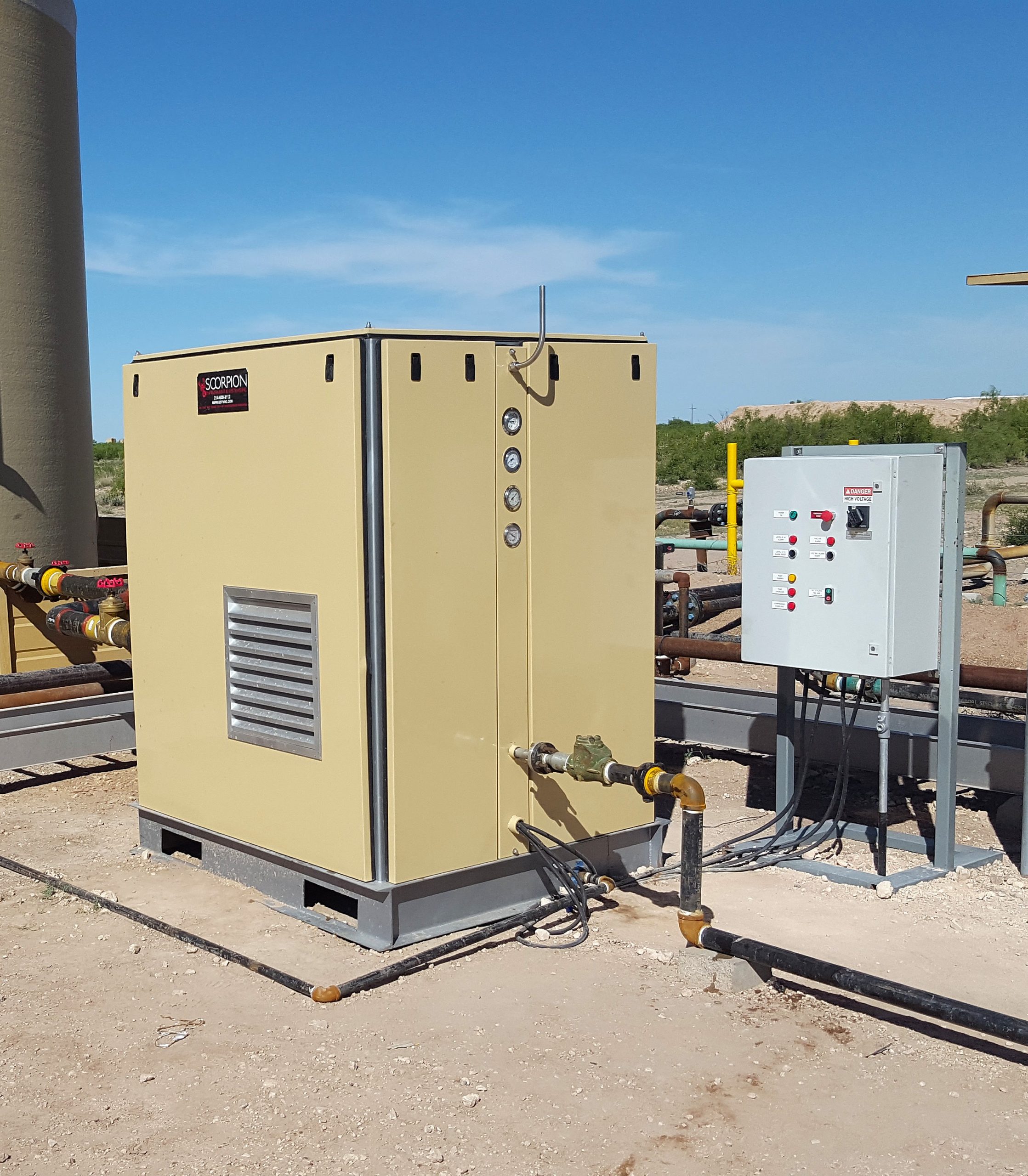
For facilities focused on total emissions containment, our closed-vent compression systems pair BTEX conditioning with vapor recovery to capture all non-condensable gases. These systems compress captured emissions back into your process at elevated pressures (up to approximately 1000 psig with booster integration), ensuring containment and preventing the release of emissions into the atmosphere.
features:
Need to Control BTEX from Your Glycol Dehydrator?
Hero builds forced-draft BTEX condensers and closed-vent compression packages that capture still-vent emissions and recover hydrocarbons. Send your dehydrator and still-vent data and we will size the right system.
Compliance and Removal Efficiency
Controlling BTEX is a regulatory requirement, not just good practice. Glycol dehydrators fall under EPA rules including NESHAP for oil and natural gas production (40 CFR 63 Subparts HH and HHH) and the NSPS OOOO program, and many states set their own VOC capture-and-control targets, often 95% or higher.
Under EPA NSPS OOOOb (effective December 6, 2024), glycol dehydrators at well sites, gathering and boosting facilities, and processing plants are subject to updated VOC emission standards. A certified BTEX condenser system with documented removal efficiency supports compliance with both the OOOOb new-source rule and the existing NESHAP requirements referenced above. Hero can provide removal efficiency documentation to support your permit application or compliance demonstration.
A BTEX control system gives you a documented way to meet them by capturing the still-vent stream instead of venting it. Hero systems are engineered for high BTEX and VOC removal, and they pair conditioning with recovery so captured hydrocarbons go back to use rather than to atmosphere.
We can help tie system performance to your specific permit. For more on the new-source rules, see our OOOOb/c overview.
Applications and Industries Served
BTEX control systems are used anywhere a glycol dehydration unit creates still-vent emissions. Common sites include well-site and gathering dehydrators, booster and compressor stations, and gas processing plants, along with tank batteries and truck-rack vapors that need VOC control.
Operators across the Permian Basin, Oklahoma, Marcellus, and Haynesville plays use BTEX eliminators to meet federal and state rules while recovering valuable hydrocarbons. Tell us your site and dehydrator size and we will confirm the fit.
Hero serves BTEX condenser customers across the major US producing regions: Permian Basin, Oklahoma, Marcellus Shale, and Haynesville Shale. Each region has distinct regulatory requirements, ambient temperature ranges, and dehydrator configurations — factors that influence condenser type, sizing, and integration.
Frequently Asked Questions
Related Systems and Resources
A BTEX system often works alongside other emission-control equipment. Explore related Hero systems below, or browse all products.
Vapor Combustors
Enclosed combustion for tank vapors and non-condensable gas.
View Vapor Combustors →Contact us
We have engineers on standby to assist with any questions or to support you with any upcoming projects. Contact us today!